

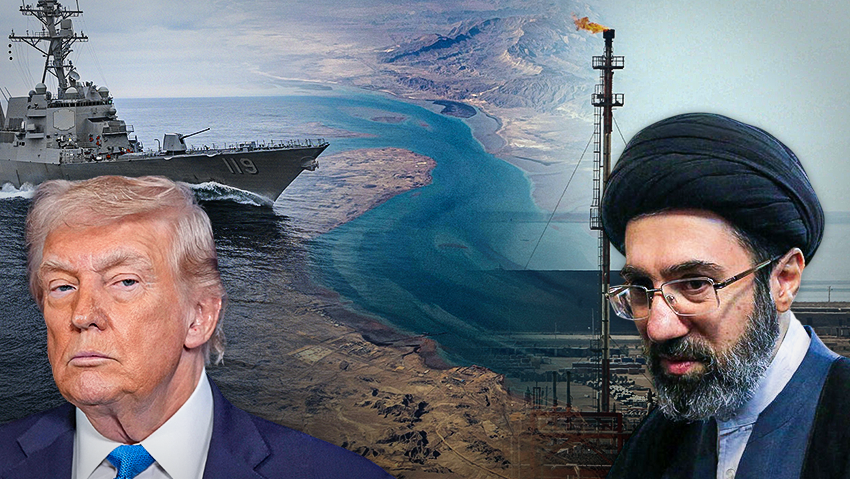
U.S. President Donald Trump is holding private discussions with his senior aides on whether to declare an end to the war with Iran, American officials told The Wall Street Journal. According to the report, Trump has indicated that he favors the idea and believes continued economic pressure will ultimately force the Iranian regime either to dismantle its nuclear program or collapse.
The discussions come six months after the United States launched its campaign against Iran, which Defense Secretary Pete Hegseth initially presented as a quick, decisive operation that would avoid a prolonged military entanglement.
Gallery
(Photo: AP/Alex Brandon, Atta KENARE/AFP, REUTERS/Stringer, Lance Davis/United States Navy/Huntington Ingalls Industries)
The Wall Street Journal reported, citing people familiar with the matter, that the Pentagon is now extending troop deployments across the Middle East, a sign that the military is preparing for the possibility that the confrontation could continue well into next year. The U.S. currently has around 50,000 troops in the region, along with 19 warships, air-defense units, fighter squadrons and paratroopers.
Trump has sent mixed signals about where the war is headed. In recent weeks, he has increasingly embraced an economic pressure campaign aimed at forcing Tehran back to the negotiating table. Iran has shown no sign of backing down, however, and the two countries continue to exchange fire while each seeks to assert control over the Strait of Hormuz.
“I like our position now much better, with almost total control of the Hormuz Strait, and their economy totally collapsing,” Trump wrote on social media. “They are just playing out the inevitable. When are the Iranian people going to rise up and fight?”
The Journal reported that senior aides have warned Trump that a major escalation beyond the recent exchanges of fire could hurt Republican prospects in the November midterm elections, though the president has said electoral considerations are not influencing his decisions on the war.
For now, the U.S. military is maintaining its large regional presence while Trump waits to see whether the economic strategy produces results. American forces are intercepting Iranian missiles, providing protection for commercial shipping in the Strait of Hormuz and enforcing a blockade of Iranian ports and coastal areas. They are also positioned to carry out larger offensive operations if Trump decides to escalate.
According to The Wall Street Journal, Trump received briefings last month on additional military options, including intensified airstrikes, the possible deployment of ground forces to seize Iranian islands near the Strait of Hormuz and a potential attack on a fortified site known as Pickaxe Mountain that could be used for covert nuclear activity. Such operations would require the United States to maintain significant military assets in the region.
As the conflict continues, deployment schedules are growing longer. The Journal reported that Army air-defense units, tasked with intercepting Iranian missiles and drones, have seen standard deployments extended from nine months to 12 months, while some units originally assigned to Europe and the Pacific have already spent more than a year in the Middle East.
“The operational tempo for air defense units before this war was already among the highest of the joint force,” said Tom Karako, director of the Missile Defense Project at the Center for Strategic and International Studies. He warned that longer deployments could wear down personnel, delay maintenance and hinder long-term modernization programs.
USS Geroge Washington arrives in the Middle East
(Photo: CENTCOM)
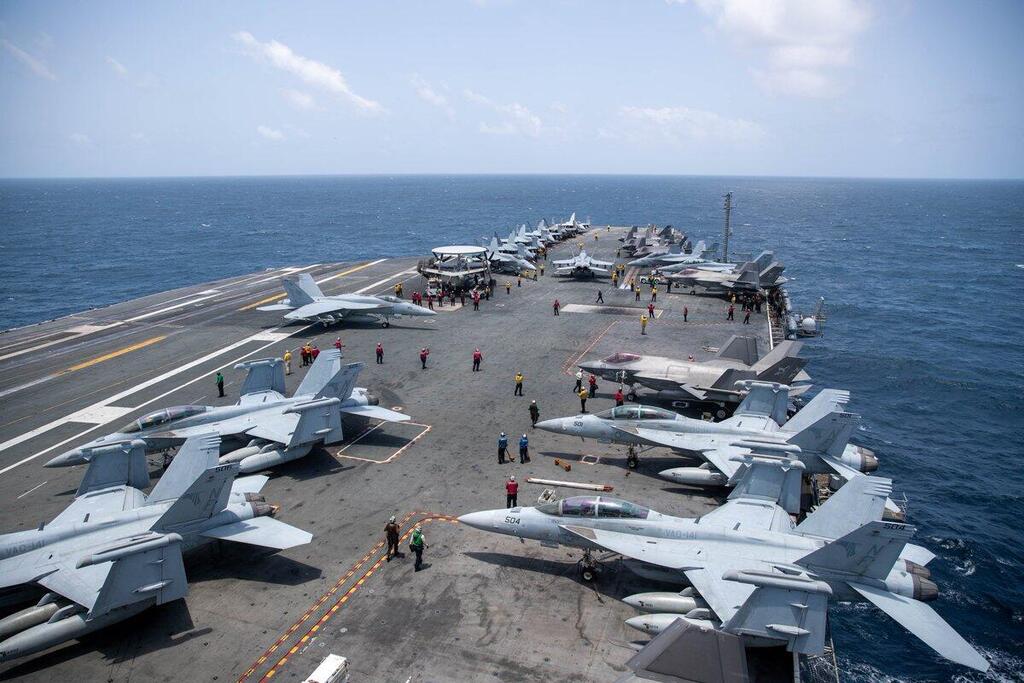
The Navy is under similar pressure. The U.S. currently has 19 warships operating in Middle Eastern waters, including two aircraft carriers and 13 guided-missile destroyers. Several destroyers sent to the region at the start of the war are now spending months at sea without the regular breaks they would ordinarily receive, according to the Journal.
The conflict has already produced some of the longest U.S. Navy deployments in decades. The USS Gerald R. Ford spent 11 months at sea before returning home in May, making it the longest-deployed American aircraft carrier since the collapse of the Soviet Union. The USS Abraham Lincoln is also heading home after an extended deployment, while the USS Theodore Roosevelt is preparing for a longer-than-usual deployment and could be sent to the Middle East.
The Journal also reported growing logistical difficulties for the Navy, with fighting in the region disrupting normal resupply arrangements and forcing ships to rely heavily on Diego Garcia, the remote U.S.-British military base in the Indian Ocean. That has meant less mail, fewer care packages and fewer opportunities for sailors to spend time away from their ships, while the longer deployments are expected to create substantial maintenance problems.
“They’re setting it up to be sustained over the long haul, meaning well into next year,” said Bryan Clark, a former senior Navy official and senior fellow at the Hudson Institute. “But to sustain it at this level, it means you’re giving up presence in other regions. So you’re kind of going all in on Iran being the focus of military posture over the next year.”
Elements of the Army’s 82nd Airborne Division could also remain in the Middle East well into 2027, according to a letter from military leaders to families reviewed by The Wall Street Journal.
“We do not share that lightly, and we understand that a longer tour weighs heavily on every household, including our own,” the letter said.
Trump, meanwhile, has emphasized that the military remains ready to strike Iran again. Speaking to reporters Wednesday after Iran attempted to lay new mines in the Strait of Hormuz, he said U.S. forces could launch additional attacks “any time we want.”
“We see everything that they’re doing,” Trump said. “They can’t go to the bathroom without us seeing it.”