

A classified U.S. intelligence assessment warning that Israel could descend into civil conflict, claims that Israeli officials pressed the Trump administration to assassinate a senior Iranian leader, and a secret report detailing efforts to secure American military support beyond Donald Trump's presidency are among the revelations at the center of a major intelligence leak scandal in Washington.
On Friday, the FBI arrested a CIA contractor suspected of passing classified information to his journalist girlfriend, whose reporting included five stories based on sensitive intelligence, three of them directly concerning Israel.
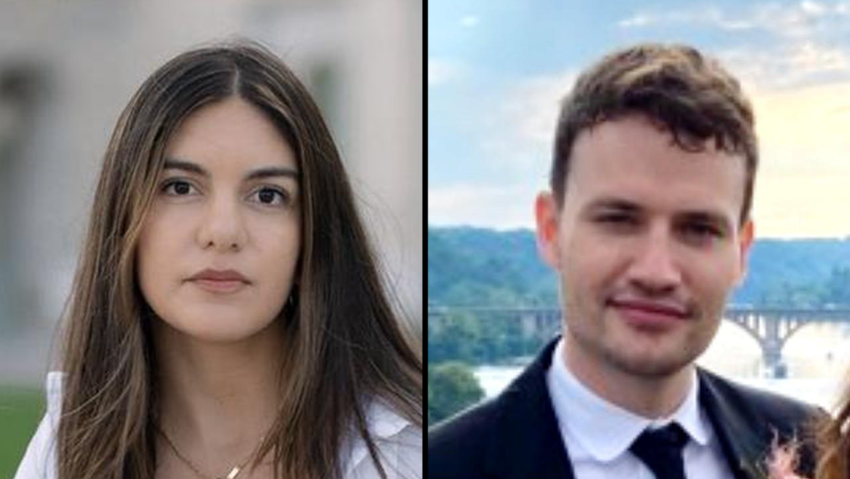
The suspect, Ian A. Brinksman, 42, of Washington, D.C., held a Top Secret security clearance with access to highly sensitive intelligence. Prosecutors allege that for months he exploited his access to U.S. intelligence systems to examine classified reports unrelated to his duties and pass information to his romantic partner, who operated an independent news publication on Substack. Investigators linked his access to sensitive documents with telephone conversations between the couple and the publication dates of articles allegedly containing information from those reports.
American authorities have not publicly identified the journalist, referred to in the FBI affidavit as "Individual 1," or disclosed the subjects of the classified reports. However, documents obtained by ynet indicate that she is American journalist Aída Chávez, founder of the independent investigative publication Capital & Empire. Chávez previously worked for The Hill, contributed to The Washington Post and served as a congressional correspondent for The Intercept and Washington correspondent for The Nation. Five articles published on her website match the dates identified in the FBI affidavit, while a passage from a September fundraising appeal appears almost word for word in the document. Chávez has not been charged with any offense in connection with the investigation.
Israel's alleged assassination request and fears of civil war
One of the most significant articles appeared on May 28, under the headline "EXCLUSIVE: Israel Privately Pressing U.S. to Kill Iran's Lead Negotiator and Launch New Strikes." Chávez reported that Israeli officials had urged the Trump administration to assassinate Mohammad Bagher Ghalibaf, the speaker of Iran's parliament and a central figure in negotiations between Tehran and Washington. According to the report, Israel sought to persuade the Americans to abandon negotiations and resume attacks on Iran's oil infrastructure, believing further economic damage could trigger widespread protests and potentially bring down the Iranian regime.
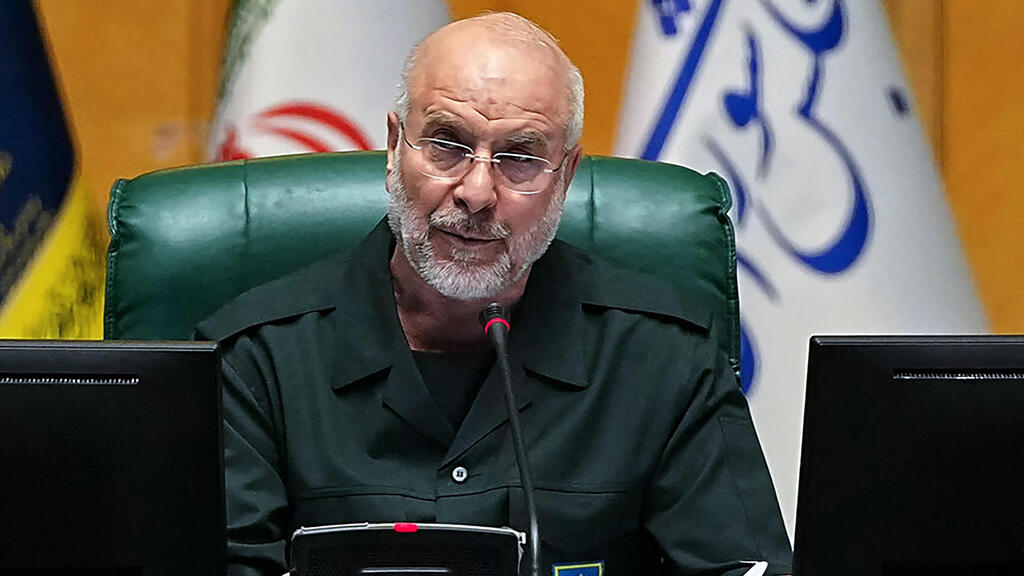
Mohammad Bagher Ghalibaf, speaker of Iran's parliament, whom Israel reportedly urged the Trump administration to assassinate
(Photo: AFP PHOTO / HO /ISLAMIC CONSULTATIVE ASSEMBLY (ICANA))
Chávez said her reporting drew on a classified intelligence assessment circulated within the U.S. intelligence community and conversations with officials familiar with its contents. The FBI affidavit states that Brinksman accessed a classified report on May 26 and called his girlfriend three times that day. Two days later, she published an article that investigators say contained information from the same report.
Another article, published on July 29, described a U.S. intelligence assessment concerning Israel's efforts to preserve its strategic relationship with Washington as American public support for Israel weakened. According to Chávez, Israeli officials were seeking to embed their country more deeply within the American military, intelligence and defense industries, making it more difficult for future administrations to reduce cooperation. The reported strategy included discussions about a possible permanent U.S. military base in Israel, expanded joint weapons development and stronger ties with influential American technology executives. Investigators said Brinksman accessed a Top Secret document on July 28, spoke with his girlfriend several times that day and that an article containing information from the document appeared the following day.
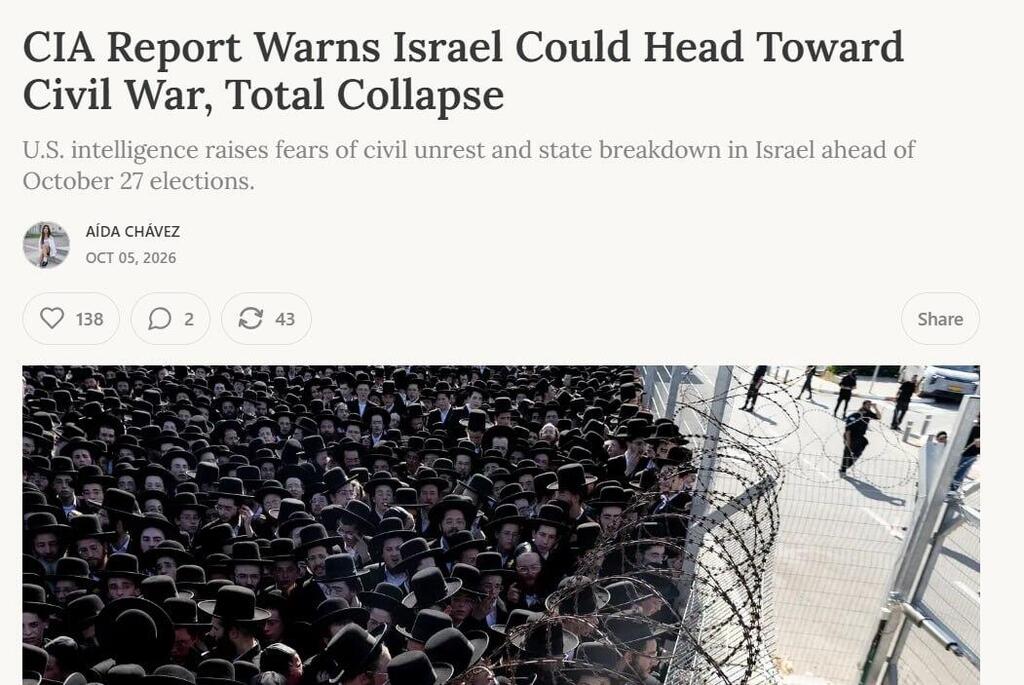
An article published by Chávez warning of the possibility of civil war in Israel
(Photo: screenshot from Capital & Empire)
The third Israel-related article, published on October 5 in cooperation with Drop Site News, concerned a reported CIA assessment titled "Fracture From Within." According to two American sources cited in the article, the assessment was prepared in August by the CIA's Red Cell, a unit tasked with challenging conventional intelligence assumptions and examining alternative scenarios. It warned that Israel's political crisis, disputes over military conscription for ultra-Orthodox Jewish men, economic pressure, social divisions and the psychological consequences of prolonged warfare could combine to produce severe internal conflict or even institutional breakdown ahead of the October 27 election.
The reported assessment raised concerns about armed military veterans returning from combat with psychological trauma, worsening political polarization and mounting resentment over exemptions from military service. It also examined the possibility of foreign technology companies withdrawing from Israel, deteriorating regional relationships and Hamas or Hezbollah exploiting domestic instability. Crucially, the report did not constitute an official U.S. intelligence prediction that civil war would occur. It was an assessment of potential risks and scenarios, as described by the journalist's sources.
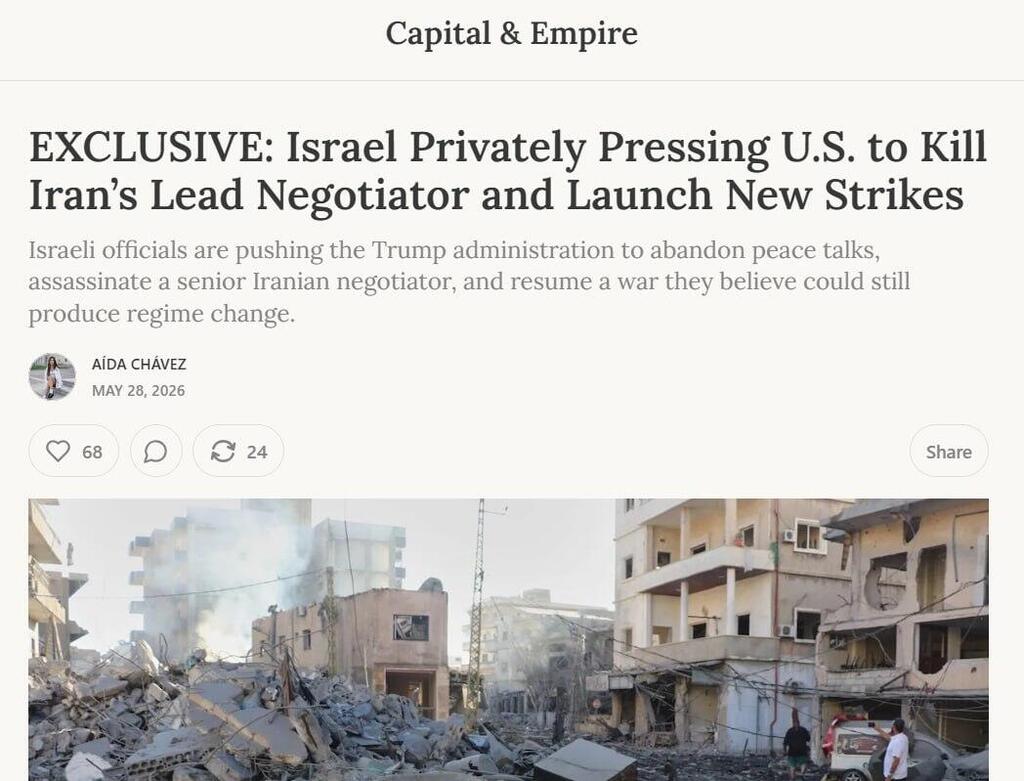
(Photo: screenshot from Capital & Empire)
The FBI affidavit details another striking sequence of events. Brinksman allegedly accessed a classified document several times in August and again on October 1. Telephone records show that he spoke with his girlfriend for 47 minutes that day, followed by another conversation lasting 37 minutes. Four days later, the article on Israel's potential internal collapse appeared.
The two remaining articles concerned other Middle Eastern developments. On March 11, Chávez reported that Bahrain had brought in forces from Jordan to help suppress protests over its involvement in the war with Iran. On May 13, she reported on a classified CIA assessment describing divisions among Washington's Gulf allies, with the United Arab Emirates and Bahrain favoring continued strikes against Iran while Saudi Arabia, Qatar and Kuwait preferred renewed negotiations. Investigators allege that classified information accessed by Brinksman also appeared in these reports.
More than 800 calls and a trail of classified documents
The evidence that led investigators to Brinksman is detailed in a 13-page FBI affidavit. He began working for a U.S. government agency in 2020 before moving to a contractor serving the same agency. In 2022, he took a position involving computer systems integration, including work transferring data between classified and unclassified systems. CIA Director John Ratcliffe confirmed that Brinksman had provided services to the agency.
His position required him to work inside a Sensitive Compartmented Information Facility, or SCIF, a secure area where personal phones and electronic devices are prohibited. Employees must use identification cards to enter and leave, creating records that became central to the investigation. According to the FBI, Brinksman repeatedly accessed classified reports, left the secure area and contacted his girlfriend, sometimes within minutes. Investigators believe these intervals allowed him to retrieve his personal phone, possibly from his vehicle, and communicate sensitive information.
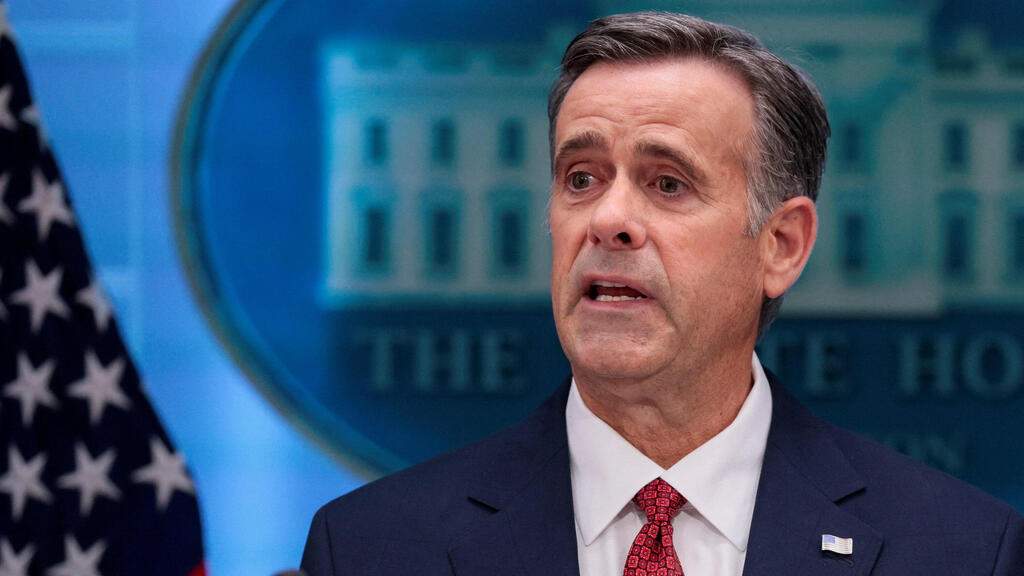
CIA Director John Ratcliffe
(Photo: REUTERS/Evan Vucci)
In one example, the journalist called Brinksman at 8:41 a.m. on March 11. Less than half an hour later, he accessed a classified intelligence report at 9:09 a.m. and again at 10:01 a.m. He subsequently left the secure facility and received another call from her that evening, lasting about 14 minutes. An article published that day allegedly contained Top Secret information from the document he had examined.
Investigators found records of more than 800 telephone calls or attempted calls between the couple during 2026. They also examined computers at Brinksman's workplace and discovered that he was among no more than six people who had accessed the journalist's Substack publication from that facility during the period under investigation. According to the affidavit, no other individual combined access to all five classified reports with visits to all five articles that authorities believe contained information from those documents.
A notebook discovered on Brinksman's desk on October 10 also attracted investigators' attention because corners had been torn from several pages. An FBI agent noted that individuals who transmit sensitive information sometimes write notes to reproduce accurate or near-verbatim quotations. However, the affidavit did not establish that the notebook contained leaked secrets or provide direct evidence that its missing pages had been used to transmit information.
‘I'm helping her build her publication’
One of the most personal details in the investigation emerged from an email Brinksman sent to a friend in November 2025. He described his new relationship with a journalist who had recently become independent and explained that he was helping her establish a publication focused on foreign policy. He added that the project had proved surprisingly fulfilling. Other emails examined by investigators supported the conclusion that the two were romantically involved.
According to the affidavit, their collaboration extended beyond conversations about published stories. On March 13, Brinksman received permission to edit a Google Docs document concerning a Middle Eastern country. Minutes later, he suggested a wording change, which his girlfriend marked as resolved. The article published that day matches a Chávez report concerning Democratic Congressman Josh Gottheimer, a prominent supporter of Israel, and congressional votes related to the war with Iran. Investigators did not identify classified information in that particular article. Brinksman had also sought advance publication clearance, as required of security clearance holders, for articles he co-authored with the journalist.
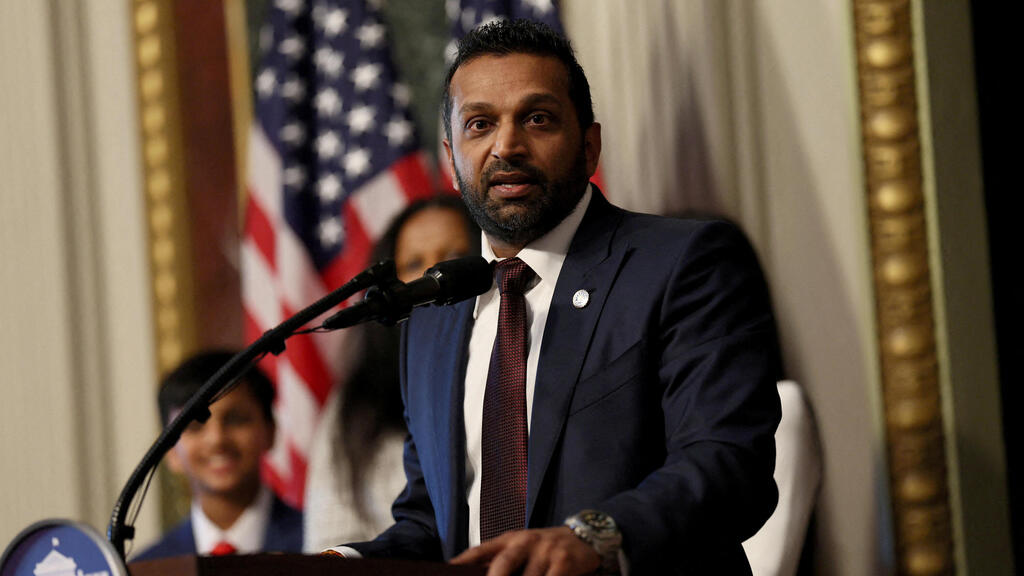
FBI Director Kash Patel condemned the alleged unauthorized disclosures
(Photo: REUTERS/Leah Millis/File Photo)
Brinksman's background adds an unusual dimension to the allegations. A graduate of Georgetown University's School of Foreign Service, he co-authored a study published in May 2019 titled "Millennial Considerations on Insider Threat: Are We A Threat Or An Opportunity?" The research examined the risks posed by employees with access to sensitive information and proposed measures to prevent security breaches, including employee training, monitoring potential warning signs and addressing vulnerabilities associated with social media and mobile technology. Seven years later, Brinksman faces allegations involving precisely the kind of insider threat his research sought to help organizations prevent.
Chávez describes Capital & Empire as an independent publication investigating the interests driving American military and economic policy. In a September fundraising appeal, she said she had published reporting based on classified CIA assessments that she believed the public deserved to know about. She also encouraged readers with inside information to provide leaks.
Brinksman has been charged with unlawfully transmitting national defense information, an offense carrying a maximum sentence of 10 years in prison. Assistant Attorney General for National Security John A. Eisenberg accused him of going far beyond his duties to obtain closely guarded American intelligence and passing it to a romantic partner he knew intended to publish it. Eisenberg described the alleged conduct as a betrayal of the trust placed in someone holding a security clearance. FBI Director Kash Patel pledged to pursue anyone who abuses access to government secrets, while Ratcliffe said the arrest followed a referral from the CIA and warned that unauthorized disclosures could endanger intelligence sources, ongoing operations and agency personnel. Brinksman remains presumed innocent unless proven guilty.