

Israel suspended Flydubai flights to Ben Gurion Airport for six days on Wednesday following the suspected terror attack aboard one of the airline’s Dubai-Tel Aviv flights earlier in the day.
The suspension could be extended depending on the findings of the investigation into the incident. Flydubai currently operates as many as 10 flights a day to Israel.
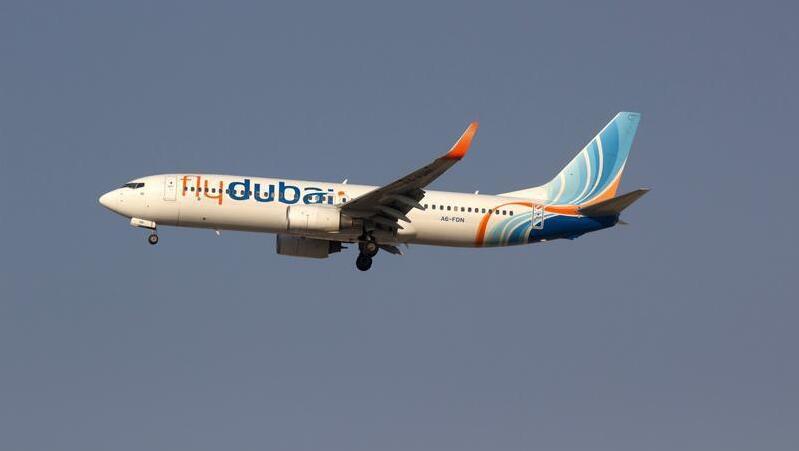
Israel grounds Flydubai for 6 days as cockpit attack probe widens
The decision followed a tense discussion in which Transportation Minister Miri Regev urged Prime Minister Benjamin Netanyahu to immediately halt the airline’s operations until the circumstances of the incident were clarified.
According to Israeli officials, the Omani co-pilot is suspected of attempting to carry out a terror attack and crash the aircraft. The report said the attempt was thwarted by another pilot with the help of Israeli passengers aboard the flight.
Regev argued that Flydubai had violated the aviation agreement between Israel and the UAE, which she said allows only pilots from countries that maintain diplomatic relations with Israel to land in the country.
An Israeli official said the Omani pilot had never previously landed in Israel.
“This is a mega-event,” a Transportation Ministry official said in explaining Regev’s position. “We came very close to a major disaster that was prevented.”
Regev also demanded that Israeli airlines immediately be allowed to resume flights to Dubai with Israeli security screening. Israeli carriers are currently unable to operate the route because of a dispute over security requirements.
Emergency codes trigger Israeli response
The Flydubai aircraft took off from Dubai at 7:05 a.m. and was scheduled to land at Ben Gurion Airport at about 9:30 a.m.
Roughly 90 minutes into the flight, as the plane entered Jordanian airspace, it transmitted squawk code 7700, the international general emergency signal. It later transmitted code 7500, indicating unlawful interference or a possible hijacking.
The aircraft then turned back toward Saudi Arabia and began flying at a lower altitude over the kingdom before heading south and then west.
There were 174 passengers aboard, including 27 children.
The hijacking alert prompted urgent consultations among Israel’s political and security leadership. Netanyahu, Defense Minister Israel Katz and IDF Chief of Staff Lt. Gen. Eyal Zamir held emergency consultations, while Israeli fighter jets were scrambled.
A major Israel-UAE air link
Flydubai is a relatively young airline, founded by the Dubai government in 2008 and beginning operations a year later. Despite its close association with Emirates, it is not an Emirates subsidiary.
For Israeli travelers, Flydubai’s importance grew rapidly after the Abraham Accords.
On Nov. 26, 2020, the airline operated its first regular commercial flight from Dubai to Tel Aviv. The aircraft received a traditional water-cannon salute at Ben Gurion Airport, with a delegation led by the airline’s CEO aboard.
Flydubai began with two daily flights, or 14 per week, between Tel Aviv and Dubai, also giving Israeli passengers access to onward connections across Asia, Africa and the Far East.
Its operation expanded sharply in the years that followed, reaching as many as 10 flights a day in each direction during parts of 2026.
Within a few years, a route born out of Israel-UAE normalization had become one of the busiest air links between Israel and an Arab country.