

IDF Chief of Staff Lt. Gen. Eyal Zamir on Monday presented the findings of an expert committee that examined the army’s internal investigations into the Oct. 7, 2023 Hamas terrorist assault, calling it “an immense failure” and pledging sweeping reforms to prevent such a catastrophe from happening again.
The committee, headed by retired Maj. Gen. Sami Turgeman, spent five months reviewing 25 internal probes launched after the Oct. 7 massacre, which killed about 1,200 people and saw roughly 250 others taken hostage into Gaza. The review revealed deep, long-standing structural, cultural and intelligence failures across multiple branches of the military.

The “meta-investigation” reviewed how the army examined itself in the wake of Hamas’ invasion, which breached the Gaza border and overran Israeli military bases and nearby communities. The discussion of the findings, presented to the General Staff Forum in Tel Aviv, lasted several hours and was described as highly charged, with sharp exchanges and mutual criticism among senior officers.
Zamir told his generals he supports forming an “external, systemwide, multidisciplinary and integrative” commission of inquiry to investigate the failures. This marks a shift from his earlier call for a state commission of inquiry established by law. Prime Minister Benjamin Netanyahu reiterated on Monday that he opposes forming a state commission, saying “half the nation” would object to it, despite repeated High Court petitions and demands from bereaved families and families of hostages still held in Gaza.
The 14-member committee included three other retired major generals, former brigadier generals and colonels, and bereaved former commanders. The committee said it sought to restore public trust in the IDF’s ability to investigate itself after confidence in earlier inquiries eroded. It issued a public call for information, interviewed about 80 relevant officers and based its work solely on IDF investigations, without addressing the political echelon or other security agencies.
The committee reviewed 25 core probes and found that two-thirds of them were incomplete or insufficient. Five were graded “red,” meaning poorly conducted and unfit for learning; 11 were “orange,” meaning partial or lacking in conclusions; and only nine were “green,” judged to be thorough and reliable. The green-rated inquiries included those on the air force, the Technology and Logistics Directorate, intelligence in Southern Command, the defensive concept along the Gaza border, Home Front Command’s regional defense and the army’s force-building posture against Hamas.
Orange investigations related to the “conception” that shaped the army’s view of Hamas, Southern Command’s operational planning, low-altitude threats such as drones and paragliders, and coordination among intelligence units including Unit 8200. The five red probes focused on the Operations Division, the “night before” events, the navy, the IDF’s overall operational planning and the General Staff’s strategic concept.
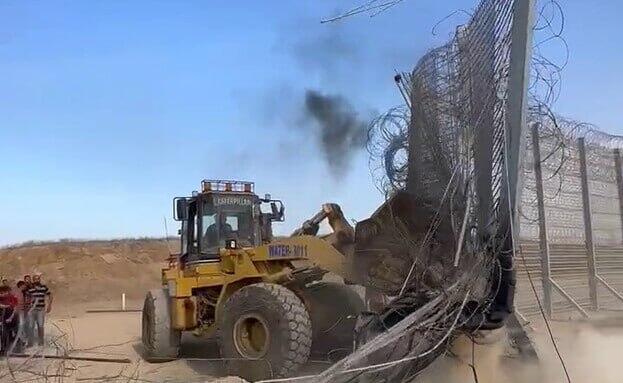
Hamas breaking the border fence on October 7
“A few years ago, the General Staff defined Hamas as a ‘terror army,’ but the IDF continued to plan operations as if facing a terrorist organization — far less than what we encountered on Oct. 7,” a senior IDF official said. The report found that investigators often lacked expertise, that key probes focused too narrowly on specific hours of the attack, and that interagency coordination was almost nonexistent.
The committee identified six main causes for the Oct. 7 disaster: a conceptual failure in understanding Hamas’ intentions; an intelligence failure in assessing and warning of the threat; neglect of the “Jericho Wall” defense plan; a flawed organizational and operational culture that deteriorated over time; a persistent gap between defined threats and actual readiness; and deficient decision-making and force deployment on the night of the attack.
“The surprise of Oct. 7 did not emerge from a vacuum,” the committee wrote. “On the night of Oct. 7, direct intelligence had accumulated which, if professionally analyzed, could and should have led to an alert and a significant operational response.” It added that throughout 2023, senior IDF officials warned that Israel’s enemies perceived internal weakening that was harming deterrence and increasing the risk of escalation, yet the IDF did not improve readiness or adapt its deployment.
The report detailed widespread shortcomings:
— General Staff: gravely underestimated Hamas’ capabilities and failed to develop a response proportionate to the threat, despite defining Hamas as a “terror army.”
— Operations Directorate: failed to prepare for a surprise-war scenario, neglected lessons from Operation Guardian of the Walls and did not lead situational assessments on the night of Oct. 7.
— Military Intelligence Directorate (Aman): failed to detect Hamas’ operational evolution, neglected long-term research into its growing power and failed to provide an early warning. Intelligence collection in Gaza was based on a narrow model that prevented effective alerts.
— Southern Command: failed to provide early warning, secure residents or adjust operational plans to the threat.
— Gaza Division: failed to raise alert levels or reposition forces despite warning signs and did not engage properly with the Jericho Wall plan.
Additional failures were found in the air force — which did not prepare adequate defenses against low-altitude threats such as drones and motorized paragliders — and in the navy, which failed to defend the coastline as Hamas terrorists infiltrated by sea. The panel noted, however, that the IDF had not raised its alert level before the attack, limiting both branches’ ability to respond rapidly.
Despite numerous warning signs, the committee found that no commander or intelligence officer assembled a complete picture of the enemy’s situation on Oct. 6 or raised the army’s alert level. “In the critical hours before the assault, not a single significant operational action was taken,” the report stated.

The Nahal Oz base command center
(Photo: Tal Shachar)
The committee praised the female field observers of the Combat Intelligence Collection Corps, who “continued to observe and report professionally until their last moments,” and said their intelligence could have exposed Hamas’ unusual activity in the months before the war if it had been properly analyzed. It also commended the bravery of civilian security coordinators and rapid-response teams in Gaza border communities, who fought to protect residents and, in many cases, died defending them.
However, the report said the IDF’s regional defense concept had deteriorated, pushing civilian defense to the margins. The Nova music festival massacre — where about 30 percent of the Oct. 7 victims and hostages were taken — exemplified systemic failures in coordination between the army and police. The committee recommended overhauling the regional defense system to align commanders’ authority, responsibility and resources, and to ensure full cooperation with other security bodies.
Zamir accepted all the recommendations and appointed his deputy, Maj. Gen. Tamir Yadai, to oversee a multiyear plan implementing them. The proposals include deep reform in Military Intelligence, putting early warning for war at the top of its priorities, and making the possibility of a surprise war the foundation for the army’s operational readiness, force buildup and organizational culture.
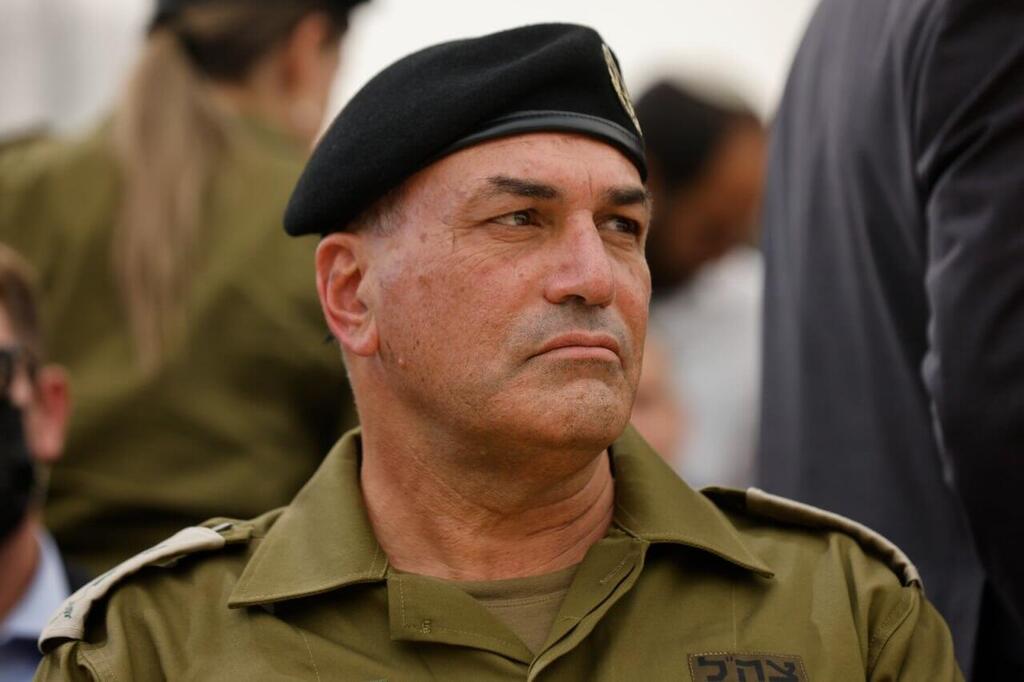
IDF chief of staff Eyal Zamir
(Photo: Olivier Fitoussi)
“We are investigating a tremendous failure — one that cost human lives, that touched countless families who lost what was most precious to them,” Zamir said. “Our responsibility is not to blur or conceal this failure, but to look it straight in the eye and learn from it.”
Zamir said the IDF has shown resilience in the two years since the attack, fighting “a multi-front war with courage and determination.” Many of the same commanders who were caught unprepared that morning, he said, “rose from the shock to lead their forces to extraordinary achievements.”
“Today, we conclude the phase of the Oct. 7 inquiries within the IDF,” he said. “We have turned over every stone to understand what happened and why. From here, we move forward toward implementation, correction and growth.”
Zamir said the army will continue to study lessons and conduct a broader systemic investigation that includes cooperation between the IDF, police and other security agencies. “From the pain, and from the battles we are still fighting today, we will build resilience and renewal for the day after,” he said. “From the rupture, we will secure a safer future for the people of Israel. And out of responsibility, we will continue to be an army that defends the nation and ensures its existence.”