

The race for UN secretary-general has entered another significant stage, with members of the UN Security Council set to hold another round of voting on Friday as part of the selection process. The focus will be on whether leading candidate Rebeca Grynspan of Costa Rica can continue to build on her advantage, whether the other candidates can close the gap and, above all, how the entry of a new candidate will affect the balance of power.
The new candidate is Ivonne Baki of Ecuador, whose candidacy was submitted by the Kingdom of Tonga. It is a relatively unusual move, as Ecuador itself is not officially backing her candidacy. Baki thus joins a number of candidates who have had to rely on other countries to submit their candidacies, a factor that could also indicate the level of political support they have at this early stage of the race.

Baki is a veteran diplomat with more than 40 years of experience. During her career, she served as Ecuador's ambassador to the United States, France, Qatar and several other Middle Eastern countries. She was involved in the Ecuador-Peru peace agreement and led international initiatives on environmental issues, protection of the Amazon and Galápagos Islands and interregional cooperation. In her vision statement, she presents herself as a candidate capable of bridging the Global North and Global South and restoring countries' trust in the UN system.
She opens her vision statement with a personal story from the Lebanese Civil War, when she was an Ecuadorian diplomat. According to Baki, while sheltering with her three children in a Beirut bunker under bombardment, she vowed that if they survived, she would dedicate her life to advancing peace. She presents the story as the starting point for her worldview and her candidacy for the post.
At the institutional level, Baki presents a vision for sweeping reform of the UN. She calls for an organization free from the influence of political blocs, focused on preventing wars rather than managing them, strengthening member states' trust, significantly improving the efficiency of the system and ensuring more effective use of the organization's budgets. One of her most prominent proposals is a major reform of the Security Council that would include abolishing the veto power of the permanent members.
Her positions on Israel are less clear-cut. In her book Destiny, she describes her close relationship with U.S. President Donald Trump but criticizes his policies toward Israel, particularly his decision to recognize Jerusalem as Israel's capital. In 2025, she even proposed turning Jerusalem into a neutral territory with special status, similar to the Vatican.
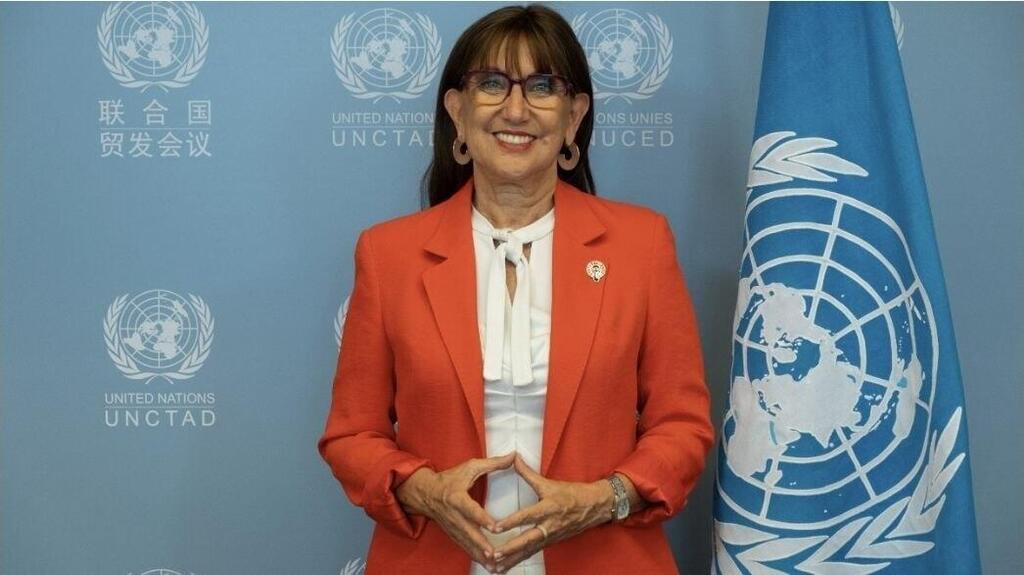
The leading candidate: Rebeca Grynspan
(Photo: UN)
Alongside Baki's entry, the race continues to center on three prominent candidates. At the top is Costa Rica's Rebeca Grynspan, who received the most support in the previous round of voting. Grynspan, currently secretary-general of the UN Conference on Trade and Development, has presented a vision focused on restoring countries' trust in the multilateral system, advancing management reforms, improving the organization's efficiency and restoring the UN's status as a central player in conflict resolution. In Jerusalem, she is viewed as a relatively pragmatic and moderate candidate who is not identified with an explicitly anti-Israel line.
From the IAEA to the UN?
In second place in the race is Guyana's Carolyn Rodrigues-Birkett, considered one of the election's surprises. Rodrigues, who served as Guyana's foreign minister and is currently the country's ambassador to the UN, emphasizes the need to strengthen multilateralism, expand the secretary-general's involvement in conflict resolution and lead reforms of the UN system. From Israel's perspective, however, she is considered one of the most problematic candidates. Over the past year, she has led a series of harsh statements against Israel on behalf of Guyana at the General Assembly and Security Council, called for full implementation of the International Court of Justice's advisory opinion on the "occupation," supported efforts to advance recognition of a Palestinian state and accused Israel of violating international law and international humanitarian law.
In her speeches, she has repeatedly emphasized Israel's responsibility for the situation in the Gaza Strip and the West Bank, while direct criticism of Hamas has been largely absent. Her vision statement also emphasizes expanding the secretary-general's political role and more active UN involvement in managing international crises.
Argentina's Rafael Grossi, who heads the International Atomic Energy Agency, also continues to be considered a significant candidate. He presents himself as an experienced administrator with a proven track record in the UN system and as someone capable of leading practical reforms at the organization. According to diplomatic assessments, Grossi also enjoys U.S. support. At the same time, he faces criticism from some countries because he continues to head the IAEA while running his campaign for secretary-general.
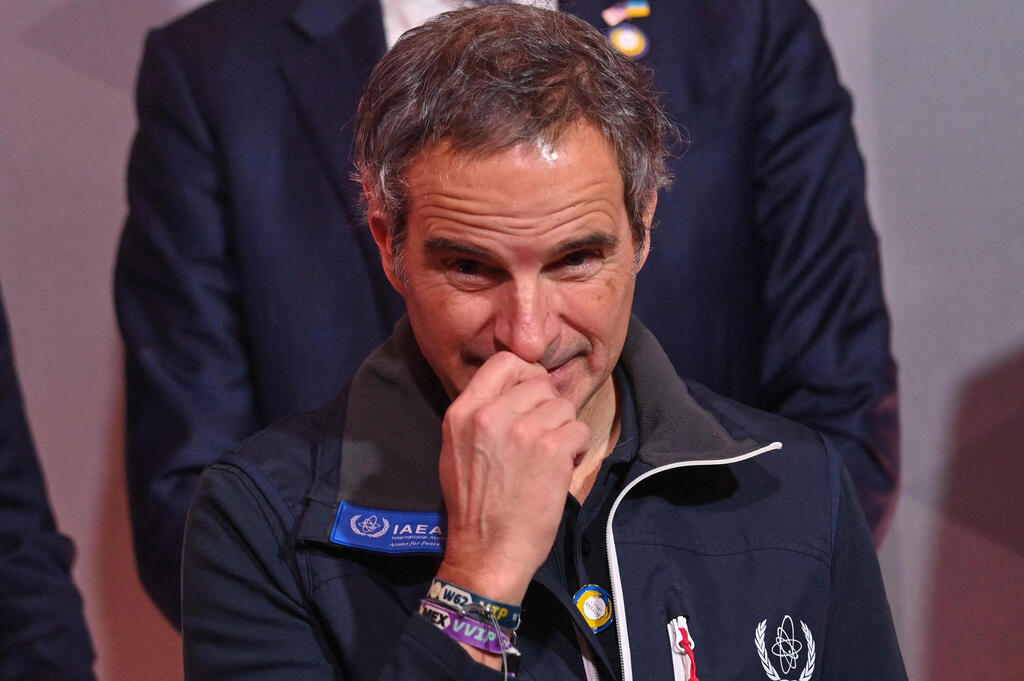
Enjoys US support: Rafael Grossi
(Photo: Sergei SUPINSKY / AFP)
Michelle Bachelet of Chile, the former UN high commissioner for human rights, remains one of the best-known figures in the race but also one of the most controversial from Israel's perspective. During her tenure as high commissioner, she led a series of harsh criticisms of Israel and is viewed by Jerusalem's diplomatic establishment as a candidate with a particularly problematic record. Despite her extensive experience, she has so far struggled to build broad support compared with the leading candidates.
The results of the previous round of voting point to a clear advantage for Grynspan, followed by Rodrigues-Birkett and then Grossi, while the other candidates have struggled to generate significant momentum. The upcoming vote will be the first to test support for Ivonne Baki, but it is also expected to show whether a smaller group of candidates is emerging to lead the race in the coming months or whether the entry of another candidate will upset the balance of power and return the contest to a more open stage.