

A Flydubai flight from Dubai to Tel Aviv carrying 174 passengers, including 27 children, landed in Saudi Arabia on Wednesday after a physical altercation between the pilots triggered an emergency signal that initially raised fears of a hijacking and prompted Israel to scramble fighter jets.
Flydubai later confirmed that the emergency signal was triggered by a fight between the pilots. The aircraft landed safely at an airport in Tabuk, Saudi Arabia, after briefly disappearing from publicly available flight-tracking services. It reappeared on the services after landing.
Interview with the mother of a passenger aboard the Flydubai flight that landed in Saudi Arabia
(Video: Reuters )


Map showing the flight path of the plane that turned back while traveling from Dubai to Israel amid a suspected hijacking
(Video: flightradar)
Flydubai said it had opened an investigation into the incident and notified Israeli authorities, while Israel joined Saudi authorities in investigating what happened aboard the aircraft. The airline’s CEO said another aircraft would be sent from Dubai to Saudi Arabia to pick up the passengers and continue to Israel.
In a separate development later Wednesday, a second flight from Dubai to Tel Aviv turned around. The reason was not immediately clear, and there was no indication that the incident was connected to the earlier Flydubai flight.
Israeli flag carrier El Al told Israeli authorities it was prepared to assist in bringing the passengers home and could dispatch a rescue flight immediately.
The aircraft briefly transmitted a code indicating possible unlawful interference while flying toward Israel. Israeli authorities initially treated the incident as a potential hijacking but later determined that the alert was apparently triggered by violence between the pilots in the cockpit.
The co-pilot, an Omani national, is suspected of attempting to crash the aircraft during the confrontation in the cockpit, Israeli officials said. He was stabbed during the struggle and was eventually subdued by the captain, an Indian national, with help from Israeli passengers.
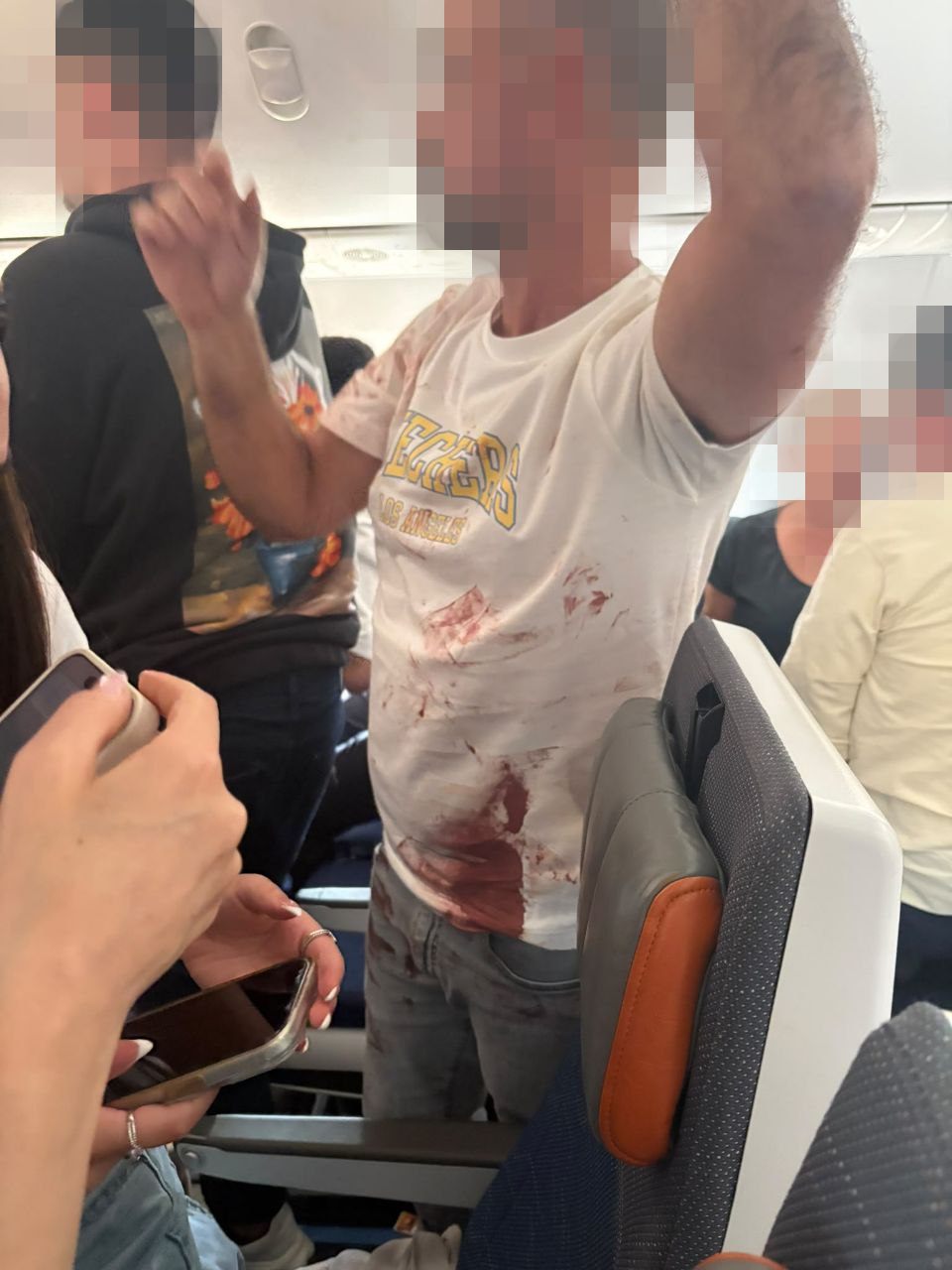
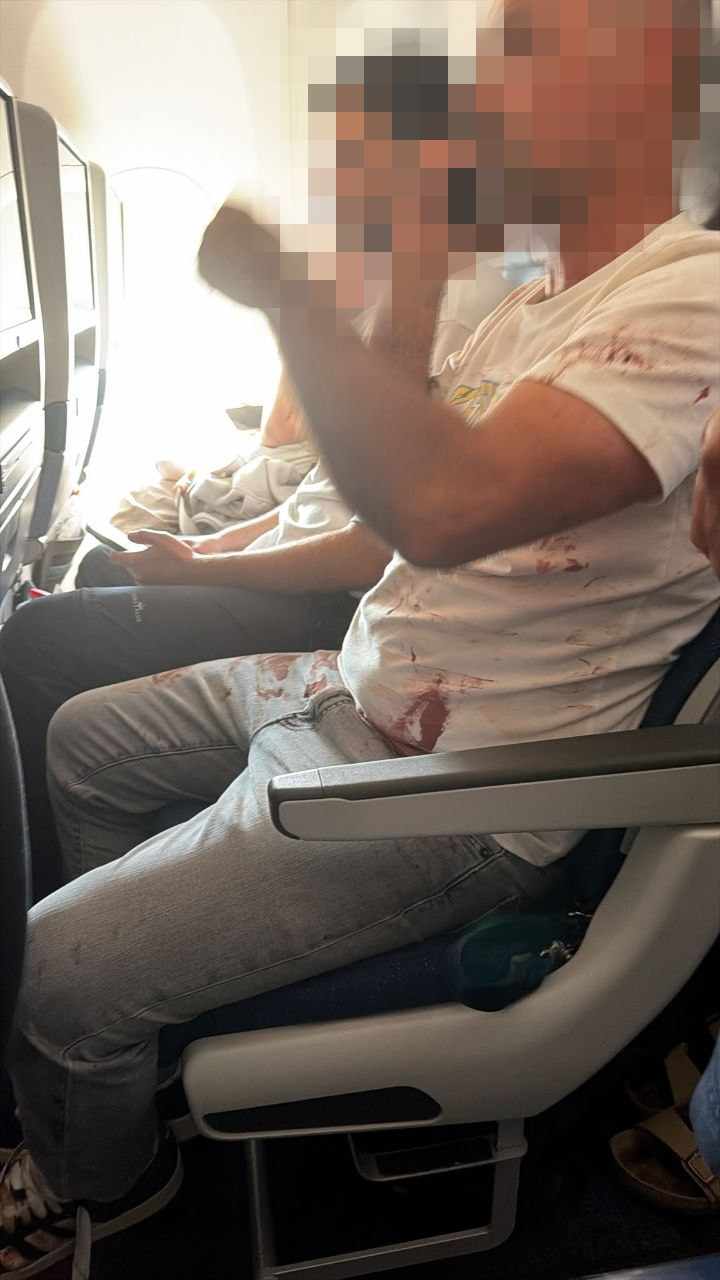
One of the passengers who helped subdue the alleged attacker
(Photo: from social media)
“The plane suddenly plunged. This could have ended in disaster,” the official said. “Everything is being investigated, and this possibility is considered very strong at this stage,” another official said, referring to the suspected suicide attempt.
Israeli authorities now consider the incident a terrorist attack and believe the co-pilot was the attacker who attempted to crash the aircraft. Authorities are separately examining whether he may also have intended to take his own life.
“It wasn’t something innocent,” an Israeli official told ynet.
Flight-tracking data from Flightradar24 showed the aircraft rapidly descending from about 34,000 feet to 14,000 feet, at one point displaying an instantaneous descent rate of about 30,976 feet per minute.
Flydubai confirmed that Flight FZ1073 from Dubai International Airport to Ben Gurion Airport experienced an “inflight incident” and landed safely in Tabuk. “All passengers are safe and being looked after,” the airline said, adding that it was cooperating with the relevant authorities and would provide further updates as information was verified.
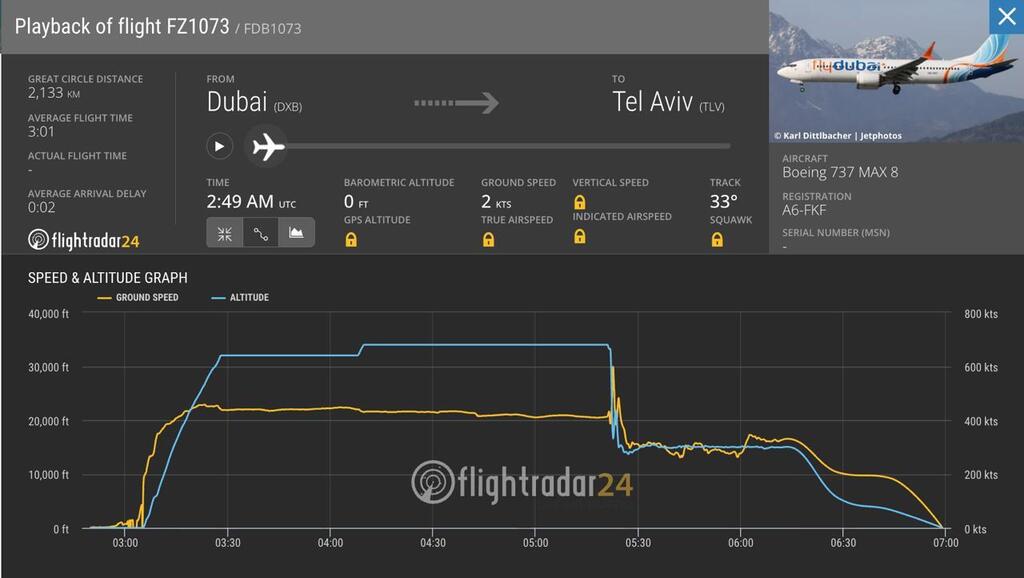
Flightradar24 data shows the Flydubai flight’s sharp descent while traveling from Dubai to Tel Aviv
A passenger identified as Miriam told i24NEWS that passengers heard screams before the cockpit was opened and they saw “a lot of blood.” She said someone had stabbed a pilot with a pocketknife and that a doctor and nurse aboard the flight provided first aid.
“We felt like we were going to crash,” she said, adding that Israeli passengers and crew members subdued the alleged attacker before the emergency landing. “There were moments when we thought we weren’t going to get out of this alive.”
The incident prompted a major security response in Israel. Prime Minister Benjamin Netanyahu and Defense Minister Israel Katz convened an urgent security consultation, while the Israel Police Operations Division ordered the establishment of a joint command center with other security agencies.
The Prime Minister’s Office said Netanyahu held consultations and monitored developments after concerns arose over an aviation incident.
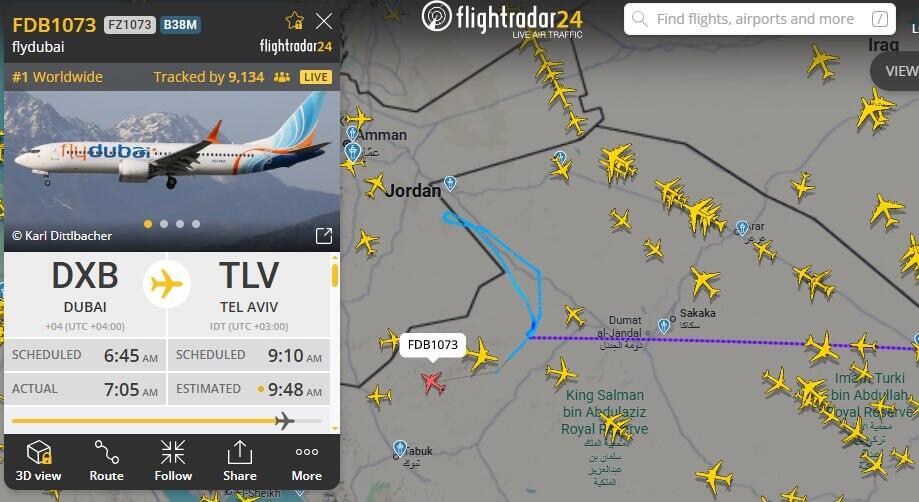
Map showing the flight path of the plane that turned back while traveling from Dubai to Israel amid a suspected hijacking
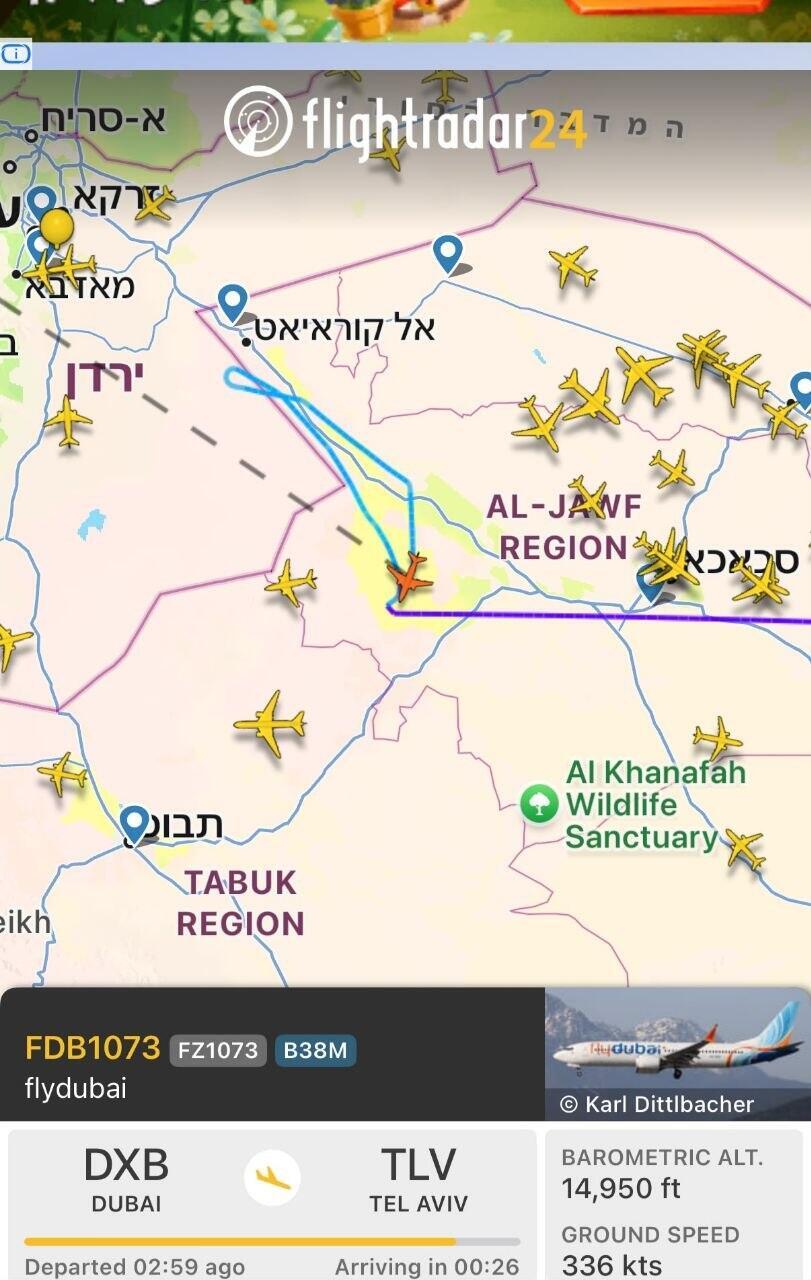
Map showing the flight path of the plane that turned back while traveling from Dubai to Israel amid a suspected hijacking
“The situation is under control, and all available measures are now being taken to bring the Israeli passengers safely back to Israel,” the statement said.
IDF said Chief of Staff Lt. Gen. Eyal Zamir held a situation assessment with the Air Force commander, the heads of the military’s Operations and Intelligence directorates and other senior officers. The Shin Bet domestic security agency, Mossad intelligence service, police and National Security Council also held assessments as officials sought to establish what had happened aboard the aircraft.
“We are preparing for every scenario,” Police Commissioner Danny Levy said while the circumstances aboard the aircraft remained unclear.
Contrary to rumors circulating online during the incident, Israeli airspace was not closed.
The Flydubai aircraft had departed Dubai in the United Arab Emirates at 7:05 a.m. and was scheduled to land at Ben Gurion Airport near Tel Aviv at about 9:30 a.m.

Flydubai airliner
(Photo: Photofex_AUT / Shutterstock.com)
About 90 minutes into the flight, as the aircraft entered Jordanian airspace, it transmitted squawk code 7700, the international transponder code signaling a general emergency. It subsequently transmitted code 7500, which indicates unlawful interference with an aircraft and is commonly associated with a hijacking.
At about the same time, the aircraft turned around, headed back into Saudi airspace and began flying at a lower altitude over the kingdom. After initially heading south, it turned west while remaining over Saudi Arabia.
Israeli Air Force fighter jets were scrambled as authorities attempted to determine what was happening aboard the aircraft.
During the initial response, an Israeli security official said authorities had no definitive evidence of a hijacking but were concerned because they had been unable to establish contact with the pilot.
“There is no definitive information about a hijacking. The pilot activated a distress signal,” the official said at the time. “We are unable to establish contact with the pilot, and that is concerning.”
Authorities subsequently determined that the emergency was apparently the result of an altercation between the pilots rather than an attempted hijacking. The aircraft ultimately landed in Saudi Arabia with the passengers aboard.