

Prime Minister Benjamin Netanyahu has decided that Israel should support Argentina on the Falkland Islands issue, British newspaper The Telegraph reported. According to the report, Netanyahu instructed Israeli diplomats to change the country's official position, join Buenos Aires in calling for direct negotiations over the islands' future and acknowledge Argentina's historical ties to the territory.
The reported shift comes amid Netanyahu's close ties with Argentine President Javier Milei, who supported Israel during the war and even lit a ceremonial torch at Israel's most recent Independence Day celebrations. It also follows British Foreign Secretary Ed Miliband's decision to impose economic sanctions on Israeli settlements in the West Bank.
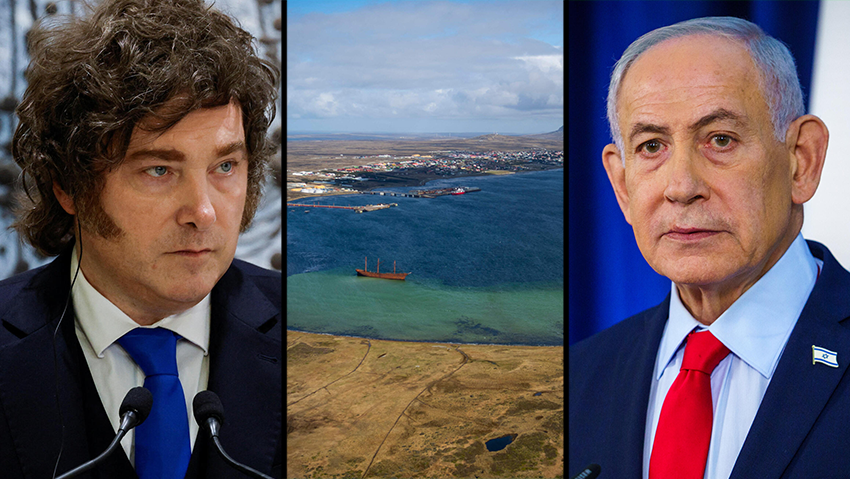
(Photo: Pablo PORCIUNCULA/AFP, REUTERS/Amir Cohen, Shalev Shalom)
U.S. President Donald Trump has also signaled that he may end Washington's neutrality over control of the islands and express support for Argentine sovereignty.
According to The Telegraph, Britain's decision about a month ago to impose sanctions on Israeli settlements prompted Netanyahu's change of position. The newspaper emphasized that Israel's move amounts to support for negotiations rather than formal recognition of Argentina's sovereignty claim over the Falkland Islands. Nevertheless, it noted that the shift could raise concerns that Israel might eventually endorse Argentina's claim if Britain intensifies its sanctions against Israel.
Israel's ambassador to the United Nations, Danny Danon, called for direct negotiations between Britain and Argentina over the islands' future during a U.N. debate last week. Danon said Israel recognizes the importance of the issue to the Argentine people and acknowledges Argentina's continued diplomatic efforts in accordance with international law. He stressed that any progress must take into account the relevant historical, legal and human considerations.
The Falkland Islands are a remote archipelago in the South Atlantic Ocean that has been under British control since 1833. Argentina, which also claims sovereignty over the territory, refers to the islands as the Malvinas. In 1982, Argentine forces invaded the islands in an attempt to seize control, in what was widely seen as an effort by the country's ruling military junta to boost its popularity. In response, then-British Prime Minister Margaret Thatcher dispatched a naval task force to the South Atlantic.
The two countries fought a 74-day war that left 907 people dead, including 649 Argentines, 255 Britons and three islanders. The conflict ended in Argentina's defeat and the restoration of British control over the islands. The humiliation suffered by Argentina is widely regarded as a catalyst for the eventual collapse of the military junta.
The Falkland Islands are currently home to about 3,500 residents. In a 2013 referendum, 99.8% of voters chose to remain under British rule, with only three voting against. Nevertheless, sovereignty over the islands remains a deeply emotional issue in Argentina. That sentiment was evident again this summer, when players on Argentina's national soccer team celebrated their victory over England in the World Cup semifinals by holding up a sign supporting their country's sovereignty claim over the islands.