

Iran's campaign against American military bases across the Middle East began with a calculated assault on the systems designed to detect incoming missiles and drones, before expanding to aircraft, hangars, warehouses and troop facilities, according to an Associated Press investigation that reveals extensive damage to the U.S. military's regional infrastructure.
An analysis of satellite imagery, corroborated by interviews with four regional officials familiar with the damage, found that more than 115 drone and missile strikes claimed by Iran or Iranian-backed militias had damaged or destroyed structures at 26 military bases and other sites housing American equipment through August. The strikes caused billions of dollars in equipment damage and forced significant changes to the U.S. military's deployment across the region.
Gallery
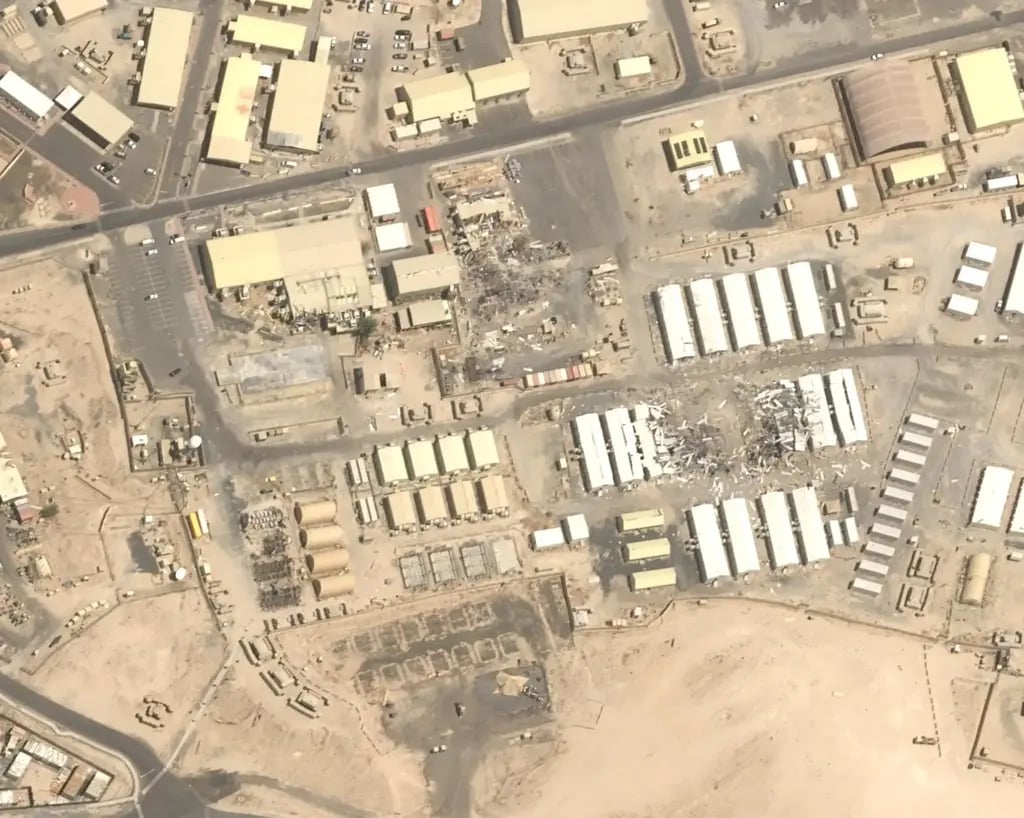
This satellite image taken over Ali Al Salem Air Base in Kuwait on July 24, 2026, shows the result of numerous strikes on this section of the base
(Photo: Airbus DS 2026 via AP)
Two regional officials told the AP that Washington has moved substantial military assets out of the Persian Gulf, including aircraft, air defense systems, communications equipment and other essential infrastructure. The findings raise questions about the vulnerability of America's regional bases as President Donald Trump considers renewed military action against Iran after the November 3 midterm elections, with Tehran threatening a major response.
The investigation offers a more detailed picture of the damage than the U.S. government has publicly disclosed during the eight-month conflict. From April through June alone, hundreds of buildings and other structures were damaged or destroyed. U.S. Central Command, which oversees American military operations in the Middle East, has repeatedly declined to provide detailed assessments, citing operational security, and did not comment on the AP's findings. Pentagon spokesman Sean Parnell maintained that American forces remained adequately protected and fully equipped to continue operations against Iran.
Iran's first targets: the eyes of US air defenses
The sequence of attacks reveals a deliberate pattern. Rather than immediately concentrating on barracks and other buildings, Iranian forces initially targeted the radar systems responsible for detecting and tracking incoming threats. Within the first two days of the war in late February, strikes destroyed protective enclosures around American radar installations at Camp Arifjan in Kuwait and Naval Support Activity Bahrain. Portable radars at Prince Sultan Air Base in Saudi Arabia and Muwaffaq Salti Air Base in Jordan were also hit.
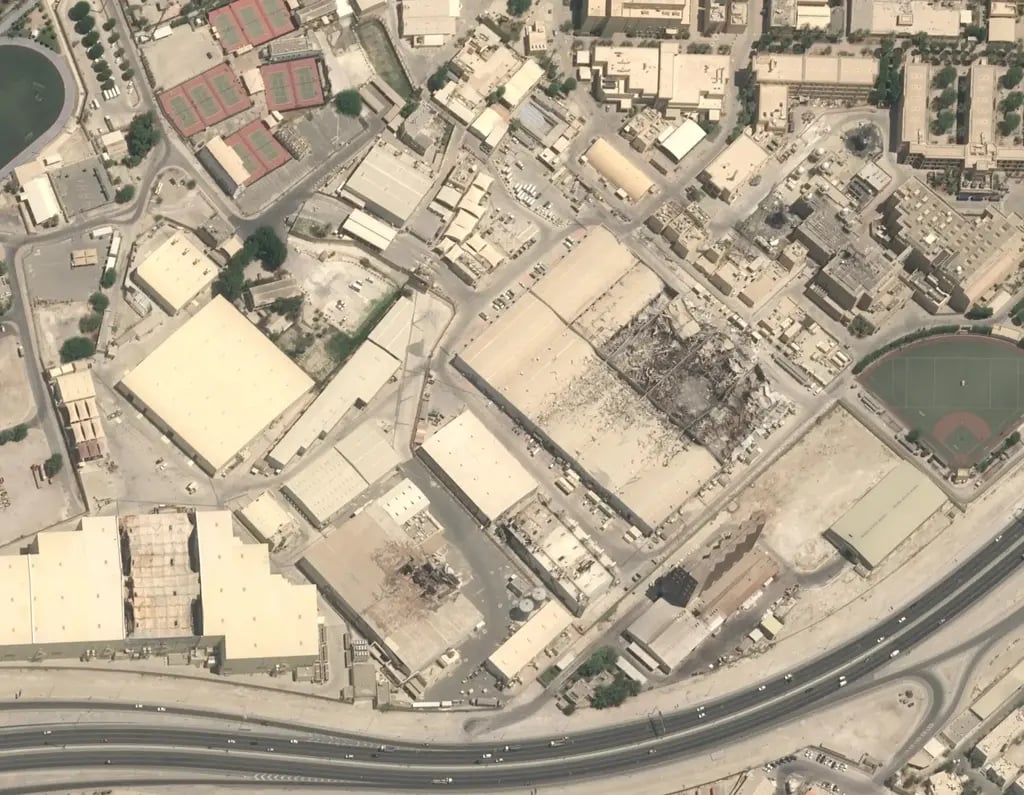
This satellite image taken over Naval Support Activity Bahrain on July 23, 2026, displaying extensive damage to the satellite communications system and warehouses
(Photo: Airbus DS 2026 via AP)
Among the most consequential losses was a radar in Jordan reported to have been destroyed. According to manufacturer Raytheon, the U.S. Army possesses only 13 of these specialized systems worldwide, with budget documents indicating that each costs approximately $500 million. Another radar in Qatar sustained extensive damage, although investigators could not determine whether it had been destroyed. The system had been purchased as part of a $1.1 billion agreement in 2013 and appeared to be the only one of its kind in the region.
N.R. Jenzen-Jones, director of the technical intelligence consultancy Armament Research Services, said the attacks appeared designed to weaken the ability of American and allied forces to respond to subsequent strikes. By targeting expensive, difficult-to-replace early-warning equipment, Iran was striking at a critical component of the regional air defense network.
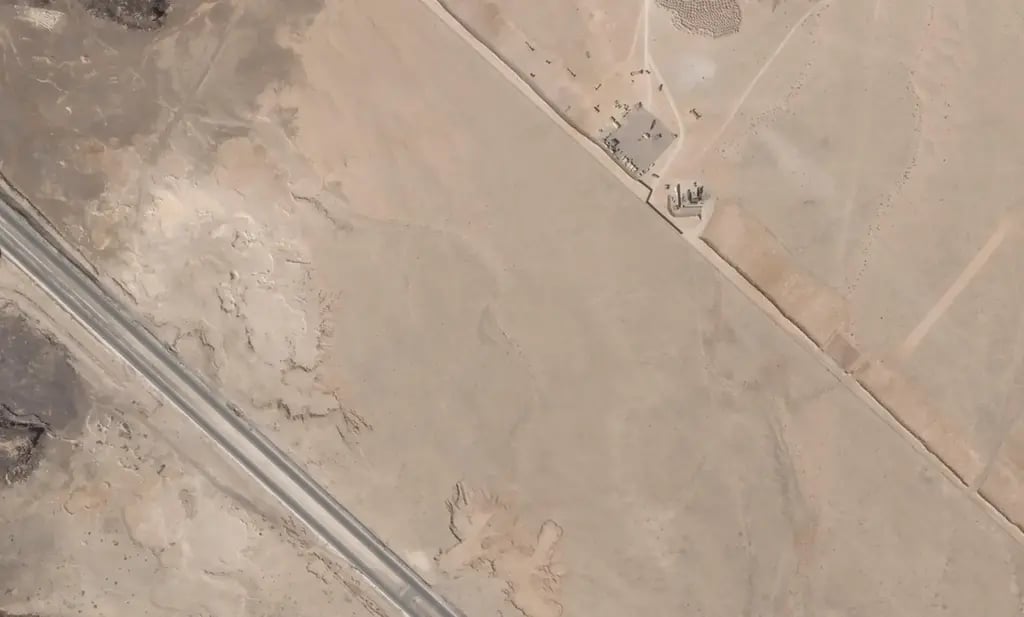
This satellite image taken over Muwaffaq Salti Air Base in Jordan on March 2, 2026, shows where a THAAD radar had been struck one day prior
(Photo: Planet Labs PBC via AP)
Once the initial radar attacks had been carried out, Iranian forces broadened their targets. During the first month of fighting, more than 50 successful strikes hit 18 locations containing American military equipment, with particular attention paid to areas housing aircraft. The targets eventually expanded to include fuel storage facilities, communications infrastructure, warehouses and troop accommodations.
Kuwait's bases take the heaviest damage
Kuwait suffered the greatest concentration of Iranian attacks, although American installations in Bahrain, Iraq, Jordan, Oman, Qatar, Saudi Arabia and the United Arab Emirates were also hit. At Ali Al Salem Air Base in Kuwait, at least 30 strikes damaged or destroyed 15 aircraft hangars, numerous warehouses and 10 buildings near a residential area.
Camp Buehring, another major American installation in Kuwait, sustained particularly widespread destruction. Most of its aircraft hangars were rendered inoperable, while facilities used by troops suffered extensive damage. The base's gym was destroyed in March, a store serving personnel was hit in late July, and strikes also severely damaged a garage and dining facility, according to regional officials familiar with the attacks.
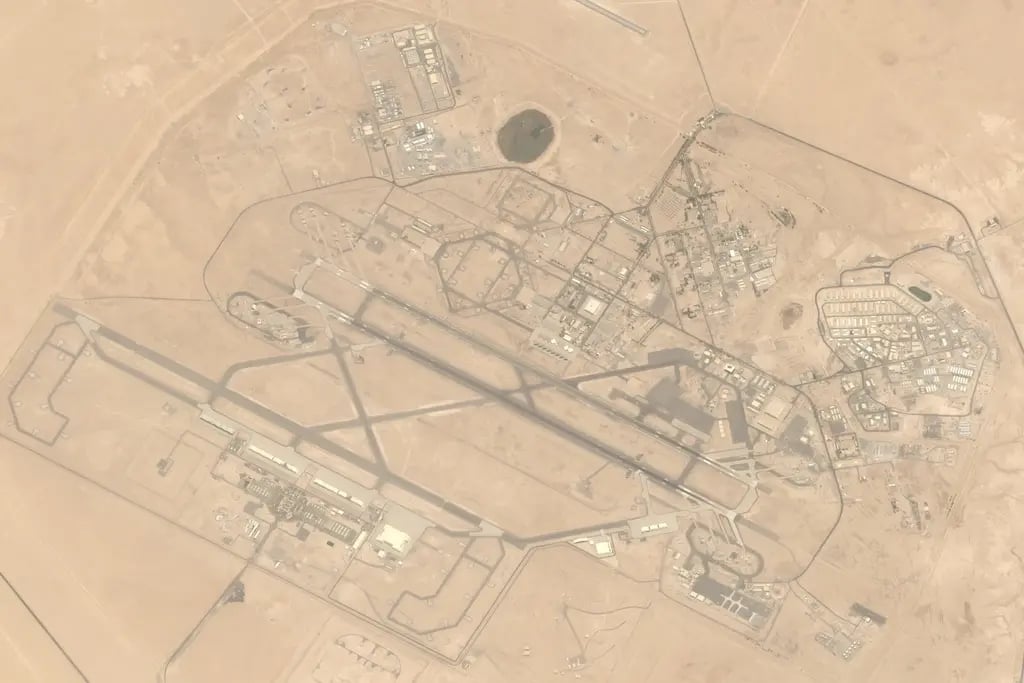
This satellite image provided by Airbus shows Ali Al Salem Air Base in Kuwait on July 28, 2026, months of strikes destroyed numerous facilities across the base
(Photo: Planet Labs PBC via AP)
The scale of destruction became clearer only months later, when high-resolution satellite images became available. Between early March and late August, more than 30 structures at Camp Buehring were damaged or destroyed. The AP identified multiple strikes on the installation during March, April, May and July.
Kuwait was also the site of the deadliest known Iranian attack on American troops during the war. On March 1, six U.S. service members were killed when a drone struck Port Shuaiba, underscoring that the attacks threatened personnel as well as expensive military equipment.
Other countries sustained significant losses. At Prince Sultan Air Base in Saudi Arabia, an Iranian strike damaged the rear section of a Boeing E-3 Sentry airborne surveillance aircraft. A regional military official who visited the installation described extensive destruction, including damaged barracks, dining halls and scattered debris. The official said several other aircraft had also been hit, including two aerial refueling tankers. Another Iranian strike damaged a CIA unit at the U.S. Embassy in Riyadh.
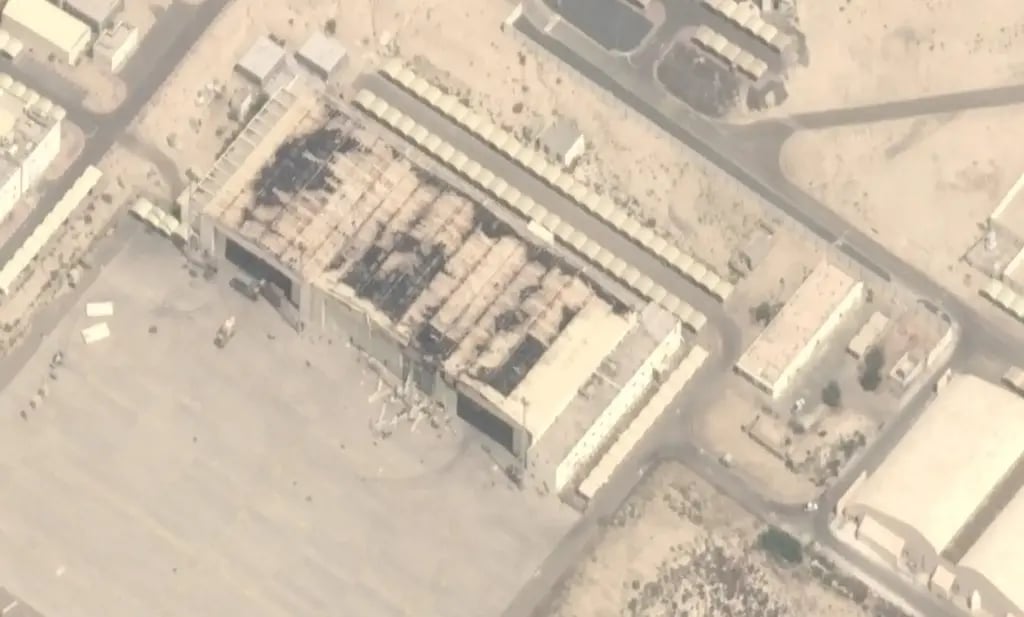
This satellite image taken over Al Dhafra Air Base in the United Arab Emirates on March 11, 2026, shows three significantly damaged hangars, struck by Iran only days prior
(Photo: Airbus DS 2026 via AP)
At Al Dhafra Air Base, approximately 20 miles (32 kilometers) south of Abu Dhabi, repeated attacks early in the conflict damaged aircraft hangars, other infrastructure and equipment, including an early-warning radar and surveillance drones. A Congressional Research Service report updated in October identified 15 American aircraft damaged at regional bases.
Satellite restrictions concealed the extent of damage
Assessing the destruction has been complicated by restrictions on commercial satellite imagery. Major providers holding U.S. government contracts blocked or delayed the public release of images following requests from American officials, sometimes citing national security concerns. This limited independent scrutiny of damaged installations, with some high-resolution images becoming available only months after the attacks.
To complete its investigation, the AP obtained imagery from OneAtlas, a satellite service owned by Airbus, and compared it with other available evidence. The resulting assessment provides a broader picture of the damage than previous official disclosures, including reports from the Pentagon's inspector general, although the military has not released a comprehensive public accounting of the losses.
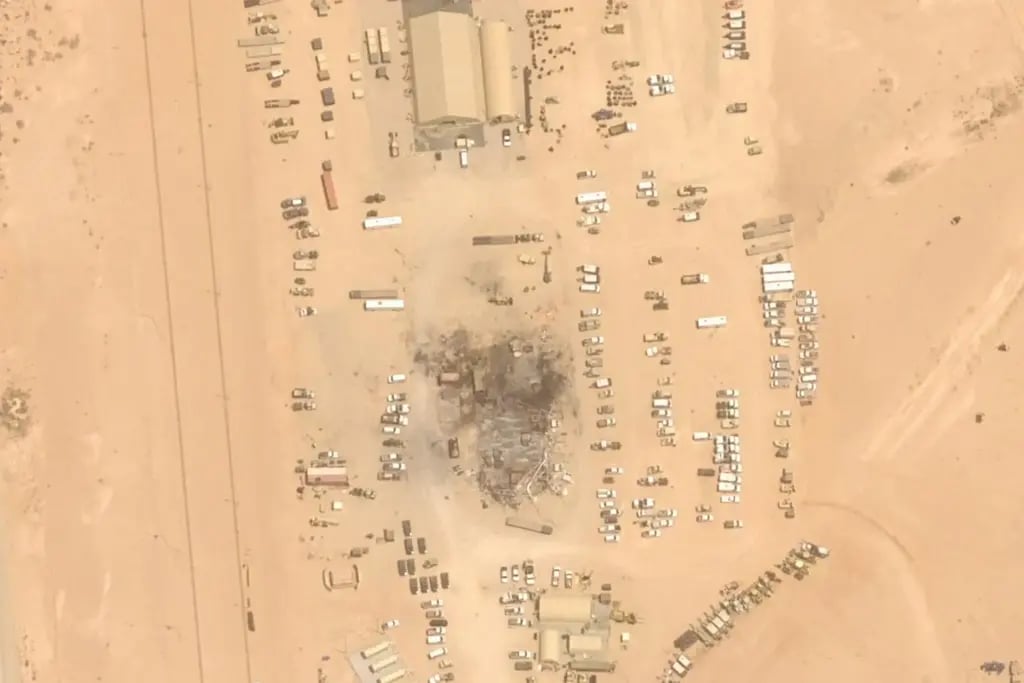
This satellite image provided by Airbus shows a destroyed facility at Prince Sultan Air Base in Saudi Arabia on May 1, 2026
(Photo: Airbus DS 2026 via AP)
The findings also highlight a broader problem confronting modern militaries: the growing vulnerability of large, fixed installations to sustained attacks involving relatively inexpensive drones and missiles. Raphael Cohen, director of the National Security Program at the RAND School of Public Policy, said even heavily equipped military forces are increasingly exposed to such threats.
"This should be a wake-up call for the United States," Cohen said.
With Washington and Tehran both leaving open the possibility of renewed fighting, further damage could deepen the uncertainty surrounding America's long-term military presence in the Persian Gulf. It remains unclear whether the United States will rebuild its damaged bases and equipment once the war ends or fundamentally rethink how its forces are positioned and protected.
For Cohen, the destruction points to a lasting shift in military strategy. The era in which American forces could depend on large, permanent bases as relatively secure platforms for operations, he argued, may be coming to an end.