


Despite a series of increasingly forceful briefings in recent days, Israel is not rushing to initiate another military campaign against Iran.
The prevailing assessment among senior Israeli officials, however, is that the next escalation is approaching and that, unless the United States and Iran reach an agreement, Israel is likely to be drawn back into the fighting.
Gallery
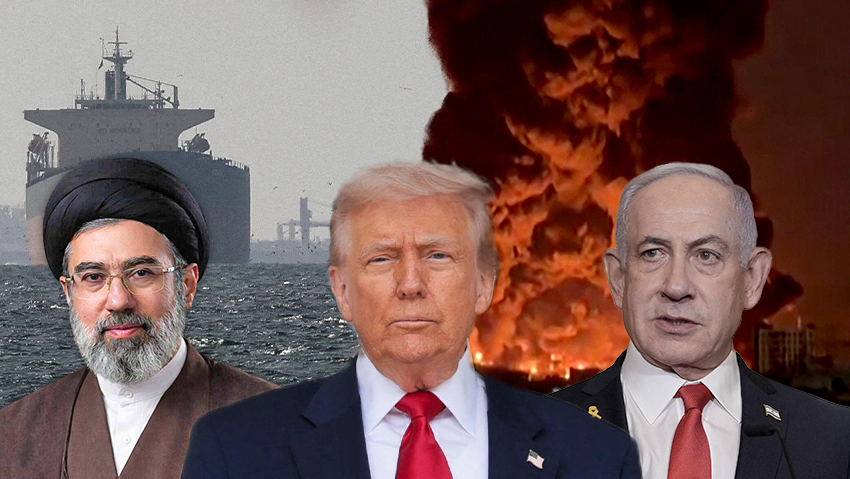
Israel is not rushing to initiate another military campaign against Iran
(Photo: AFP - SOURCE: UGC / UNKNOWN, REUTERS/Jessica Koscielniak/Stringer, Oliver CONTRERAS/AFP)
Israel does not want to fire the opening shot, but it is preparing for a moment when it could join an American operation, respond to a direct Iranian attack or launch a preemptive strike against an imminent threat.
Officials in Jerusalem believe such a justification will eventually emerge. Should it not arise on its own, pressure to identify grounds for action is expected to increase.
Senior Israeli officials do not believe a new campaign is imminent, but they see the coming weeks as a significant window.
Their assessment is that U.S. President Donald Trump has a period extending from the end of the World Cup until September to maximize pressure on Tehran and attempt to secure an agreement.
Should diplomacy fail, they expect U.S. operations against Iran to expand, bringing the question of Israeli participation back to the center of the debate.
“We are waiting. If they call us, we will come,” a senior security official said.
“We still have many targets, including infrastructure, nuclear facilities, missiles and other areas. If there is a call, we will act.”
According to the official, the IDF is preparing for several scenarios: an American request to participate in an additional military operation, a direct Iranian attack on Israel or evidence that Tehran is preparing such an assault, which could prompt a preemptive strike.
“The IDF is ready. There is 100% coordination with CENTCOM,” the official said.
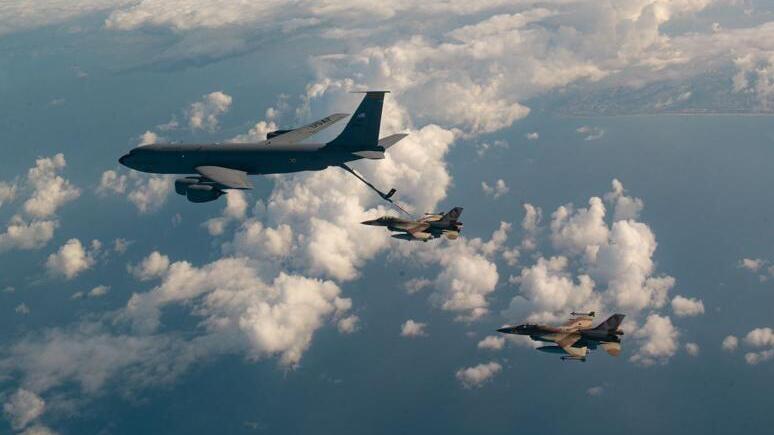
Israeli aircraft and a US tanker
(Photo: IDF)
One reason some defense officials favor another opportunity to strike is a belief that the previous campaign ended before Israel had achieved all of its objectives.
Security officials say significant targets remain in Iran, including missile infrastructure, nuclear facilities, command systems and other strategic assets.
Israel refrained during the previous round from launching broader attacks against Iran’s electricity network, oil installations and essential civilian infrastructure, partly because of limitations imposed by Washington.
“We came out with the feeling that we had not completed the job,” one official said.
Supporters of further action argue that Iran is now in a position of weakness that could allow Israel and the United States to deepen the pressure.
The regime has suffered military and economic damage, is facing growing domestic pressure and remains entangled in confrontations with Gulf states.
“Their situation is difficult right now,” a security official said.
“Protests are beginning, even if they are not yet widespread. I do not know whether there is a formula that can bring down the regime, but it is clearly under pressure.”
Israeli officials also believe Iran’s attacks against Gulf states may have created a regional opportunity that did not previously exist.
US strikes Iran
(Video: CENTCOM)


Washington is reportedly examining whether it can form a coalition of moderate Arab states against Tehran following repeated Iranian attacks across the region.
One Israeli official described Iran as “the neighborhood bully who cannot stop attacking his neighbors.”
Countries that previously sought to avoid a direct confrontation with Tehran may now be more willing to participate in a broader effort against it, the official said.
For precisely that reason, Washington may not want Israel at the forefront at this stage.
Visible Israeli participation could complicate efforts to assemble an Arab coalition and transform a regional campaign against Iran into what would again be perceived as an Israeli-Iranian war.
Officials in Jerusalem understand that concern and are not pressing to join the fighting at any cost.
‘Muscle-flexing, not the prime minister’s position’
Despite briefings about additional targets and the IDF’s readiness, one senior Israeli official cautioned against interpreting them as evidence that Israel or Prime Minister Benjamin Netanyahu is eager to return to war.
“It is not really serious. It is more muscle-flexing,” the official said.
“They are not truly eager to return to fighting. It is mostly muscle-flexing from figures on the right. That is not what the prime minister thinks.”
Some political leaders also believe Israel’s preferred course for now is to allow economic pressure on Iran to continue.
Bridges struck in Iran
“The Iranians are in a difficult position, and the longer time passes, the weaker the regime will become,” a senior Cabinet official said.
The dispute is therefore not primarily about whether the IDF is capable of acting. Officials across the political and defense establishments agree that it can.
The central questions are whether Israel should use that capability now and what strategic achievement would justify the cost.
A senior Israeli official opposed to reopening the campaign said he still struggled to identify a clear strategic objective that had not already been achieved.
“What can we accomplish that we have not already accomplished?” he asked.
“Destroy the electricity infrastructure? The oil infrastructure? More missile bases? Would that really bring down the regime?”
The official said there might be several high-value targets whose destruction could strengthen deterrence.
A joint operation with the United States could also demonstrate that there is no rupture between Washington and Jerusalem.
“Those are possible answers,” he said, “but it is still not clear what achievement another strike is supposed to deliver.”
Opponents of renewed military action also warn of the potential cost to Israel.
Another campaign could harm the economy and tourism, disrupt the summer vacation period, deplete interceptor stocks and renew Iranian drone attacks, against which Israel still lacks a complete defensive solution.
There is also concern that Hezbollah would be unable to remain outside the confrontation for long.
A renewed conflict with Iran could trigger escalation on Israel’s northern border and undermine the diplomatic process Jerusalem is seeking to advance with the Lebanese government.
Domestic politics also form part of the background.
Some officials believe another military achievement against Iran could strengthen Netanyahu ahead of elections, although there is no official indication that political considerations are driving the decision-making process.
Israeli officials insist that any decision will be based on security developments and coordination with the United States.
Trump holds the final decision
Even should Israel conclude that another round would be beneficial, senior officials stress that the decision does not rest in Jerusalem alone.
Trump is setting the pace of events and defining the limits of the campaign.
He further raised the prospect of escalation in a Truth Social post Monday, warning that Iran would face severe retaliation for any additional American military deaths.
“Every time Iran kills an American soldier, they will pay for that killing many times over!” Trump wrote. He said the directive had been passed to Defense Secretary Pete Hegseth, Joint Chiefs Chairman Gen. Dan Caine and “every leader in the military.”
“The final arbiter is Donald Trump, and what he says will determine what happens,” a senior Israeli official said.
Officials in Jerusalem are also uncertain about the American president’s central objective.
It remains unclear whether Trump’s priority is the collapse of the Iranian regime, preventing Tehran from obtaining a nuclear weapon or fully reopening the Strait of Hormuz.
“If Trump wants us, we will join,” the official said.
“If he does not want us, we will sit quietly. If the Iranians make a mistake and try to drag us in, we will enter.”
For now, Israel does not intend to lead the next campaign, but neither does it intend to remain outside it at any price.
The IDF is preparing targets, the defense establishment sees an opportunity and the political leadership is waiting for Washington.
Israeli officials believe the grounds for joining another operation will eventually emerge.
The remaining question is not whether Israel is capable of acting, but when Trump will decide that the time has come.