

Riyadh’s international airport in Saudi Arabia was struck Saturday night by a missile launched by Yemen’s Houthi rebels, two days after another deadly attack on King Khalid International Airport. The attack marked the deadliest strike in a Gulf Arab country since the US-Israeli war with Iran began in February, and came as President Donald Trump said Washington could join Saudi military strikes against the Houthis, although no decision had been made.
A regional official familiar with the details told The Associated Press that the missile struck an area housing passenger Terminals 3 and 4, which serve domestic flights, and that there were “many casualties.”
Saudi aviation authorities later said at least 12 people were killed and 309 wounded in the attack.
Houthi missile strike on King Khalid International Airport in Riyadh
(Video: X)


According to the statement, those killed included an American citizen, an Egyptian, a Jordanian, a Syrian, a Palestinian, a Sudanese national, two Bangladeshis and four Saudis.
Reports said the airport was evacuated and numerous ambulances were dispatched to the scene. Saudi authorities deployed heavy security at the complex and warned against circulating any footage of the Houthi attacks. So far, no footage from the airport has been released.
The New York Times cited two Western officials and one Arab official, all speaking anonymously because they were not authorized to discuss the attack publicly. Earlier, a medical source at a Riyadh hospital told AFP that at least two people had been killed, identifying one as an Egyptian crew member working for a Saudi airline and the other as a Palestinian carrying Egyptian travel documents.
Saudi authorities initially confirmed injuries without providing a casualty toll. The Saudi General Authority of Civil Aviation said it was still assessing the damage at the airport and announced the temporary suspension of operations. Incoming flights were diverted, departures were delayed or canceled and passengers were evacuated as emergency crews responded.
The missile struck the complex housing the airport's domestic terminals, triggering panic among passengers and staff. Witnesses described hearing an explosion and seeing injured people near boarding gates. Foreign embassies urged their citizens to avoid the airport and surrounding areas.
Senior Houthi official Mohammed al-Bukhaiti claimed responsibility for Saturday's attack, saying it was retaliation for Saudi strikes in Yemen, including attacks he said had targeted civilian infrastructure. He argued that the protections afforded to civilian facilities should apply equally in Yemen and elsewhere, citing airports, seaports, hospitals, markets and venues for weddings and funerals.
The Saudi-led coalition fighting the Houthis said later Saturday in a statement that a projectile had fallen near King Fahd International Airport in Dammam. The airport, in Saudi Arabia's Eastern Region, has become an important alternative to Riyadh airport following the spate of attacks on the capital.
The attack in Riyadh came just two days after another deadly Houthi assault on the airport. Saudi authorities said three Saudi citizens, including an airline pilot, were killed in Thursday's strikes, which also damaged an aircraft belonging to the national carrier Saudia.
The Houthis have repeatedly targeted Saudi airports, oil facilities and other infrastructure in recent weeks, seeking to disrupt air traffic and increase pressure on Riyadh. The group has warned international airlines against flying through Saudi airspace, declaring much of it a military operational zone.
The repeated attacks also threaten Crown Prince Mohammed bin Salman's efforts to transform Riyadh into a major international business and travel hub, with high-profile international events scheduled in the Saudi capital in the coming weeks.
Trump weighs joining Saudi strikes
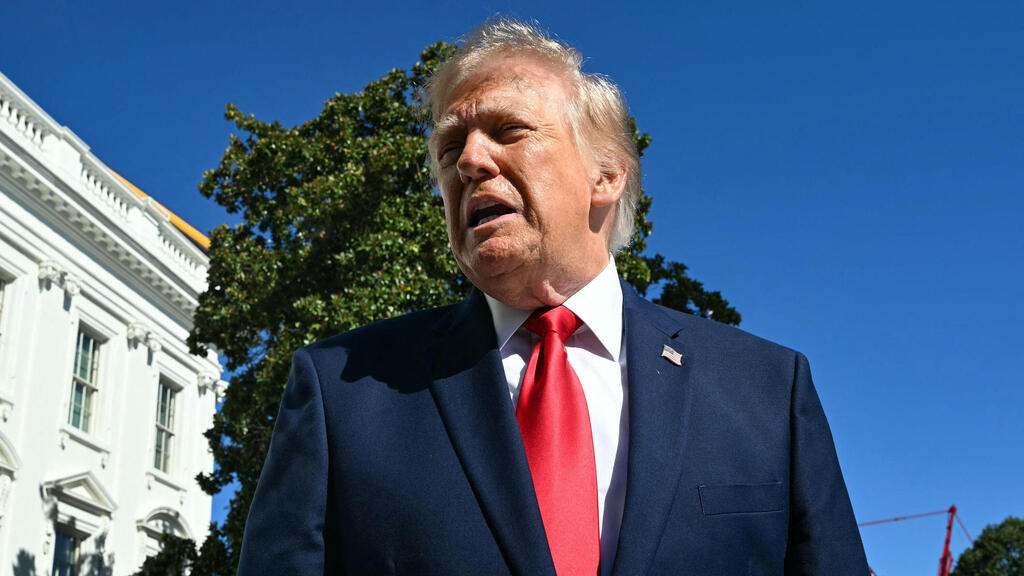
Asked Saturday whether the United States would join Saudi Arabia's military campaign against the Houthis, Trump said the administration was considering the possibility.
"We may. We're going to look at it," Trump told reporters outside the White House. "We move very quickly."
Trump said Washington had only recently learned of the latest attack and would decide how to respond. His comments raised the possibility of more direct American involvement in a conflict that has intensified across Yemen and Saudi Arabia.
Saudi warplanes have been conducting airstrikes against Houthi targets in Yemen in support of the internationally recognized Yemeni government, which has launched a major counteroffensive aimed at retaking territory captured by the rebels.
The Houthis say Yemen has been subjected to hundreds of Saudi airstrikes in recent weeks, including attacks that they claim have killed children and other civilians. The Saudi bombing campaign and the Houthis' attacks on civilian aviation facilities have intensified the conflict on both sides of the border.
The renewed fighting has centered on the strategic Bab al-Mandab Strait, which connects the Red Sea to the Gulf of Aden and serves as a vital maritime passage for international commerce and energy shipments.
The Houthis seized significant stretches of Yemen's western coastline during a rapid offensive last month, threatening maritime traffic through the strait. Saudi-backed government forces subsequently launched an operation known as Yemen Dawn, seeking to reverse those gains.
Government forces have claimed progress in recapturing territory around the strait, while the Houthis have disputed some of those claims and said they repelled attacks. Heavy fighting has also continued in areas around Taiz, with both sides reporting casualties.
Pakistan and Turkey drawn into Saudi defense efforts
The escalation has also placed renewed attention on Saudi Arabia's defense cooperation with Pakistan and Turkey, which signed a trilateral agreement in Mecca in August.
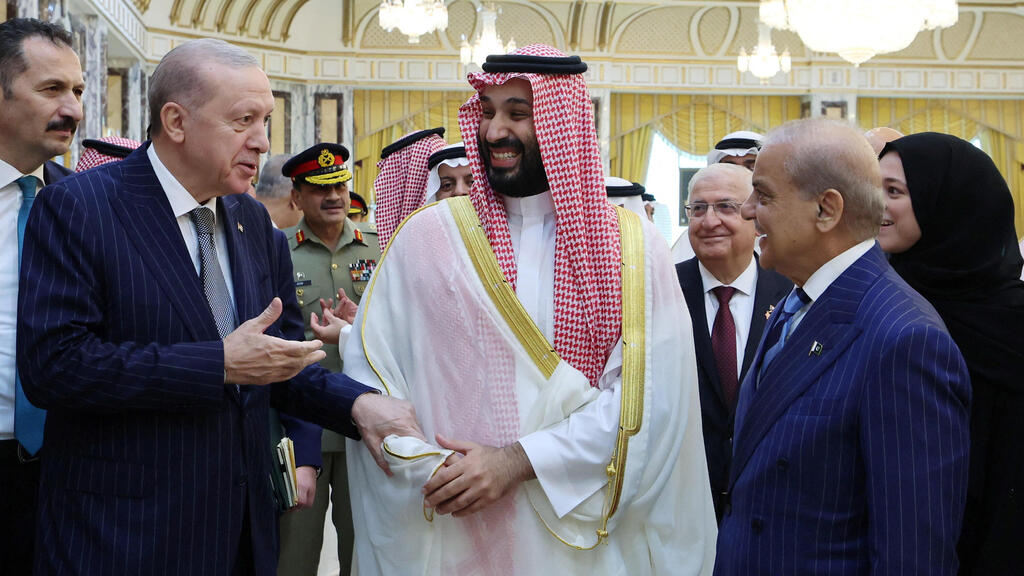
Saudi Crown Prince Mohammed bin Salman, Turkish President Recep Tayyip Erdogan and Pakistani Prime Minister Shehbaz Sharif at the signing of the trilateral agreement
(Photo: Murat Cetinmuhurdar/Turkish Presidential Press Office/Handout via REUTERS)
The three countries agreed to implement collective defense arrangements and deploy military capabilities to Saudi Arabia in response to the growing threat.
Pakistan, however, has emphasized that its role is defensive. Islamabad has said its forces will not cross into Yemen to carry out offensive operations against the Houthis, although they may assist in protecting Saudi territory and sovereignty.
Turkey has also framed its involvement within the trilateral defense arrangement, while Saudi Arabia continues its military campaign in support of the Yemeni government.
First published: 19:05, 10.10.26