

The United States is quietly relocating some diplomats and their family members from posts across the Middle East amid growing concerns that the escalating conflict involving Iran-backed Houthi rebels could spread across the region, CNN reported, citing multiple sources familiar with the moves.
The State Department this week ordered non-emergency personnel and all family members to leave Saudi Arabia, citing the recent escalation in Houthi attacks. At the same time, Washington has been making less-publicized staffing adjustments at embassies in Jordan, Bahrain, Kuwait, Qatar, the United Arab Emirates and Lebanon.
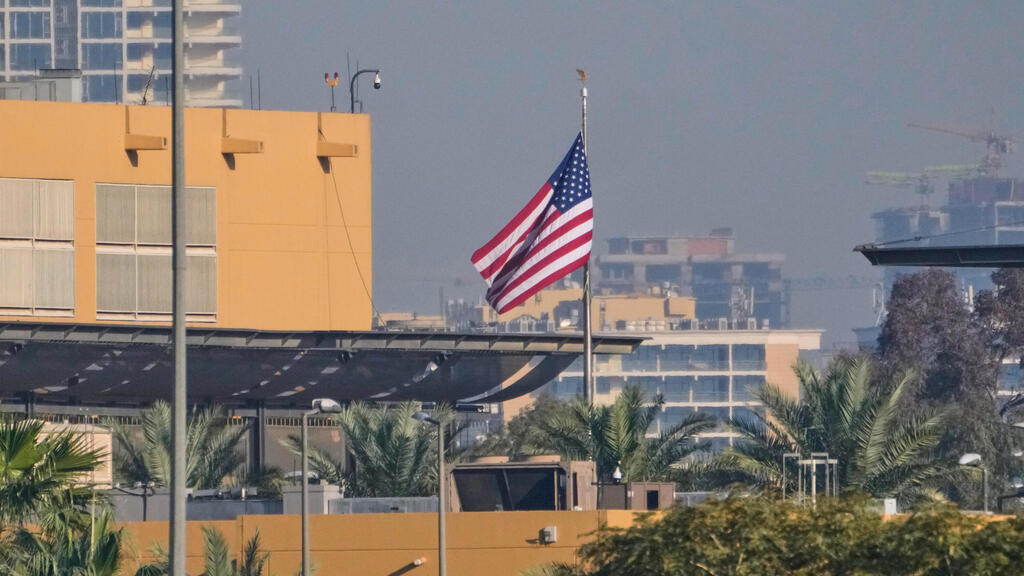
Embassy of the United States, Baghdad
(Photo: AP/ Hadi Mizban)
Unlike the formal departure order issued for Saudi Arabia, the changes at those six embassies have not been publicly announced. The State Department maintains that their operational designations remain unchanged and that they continue to operate under "restricted operations" status, which allows staffing adjustments without a formal change in embassy status.
The moves come as Houthi attacks on Saudi Arabia intensify, prompting repeated State Department warnings that the hostilities "have the potential to escalate rapidly beyond that immediate area."
Tensions have also risen following President Donald Trump's suggestions that the United States could resume military strikes against Iran after the November midterm elections. Israel, meanwhile, has reportedly pressed Washington to take military action sooner, although those efforts have so far been unsuccessful, according to sources familiar with the discussions.
Diplomats describe chaotic departures and mounting frustration
For many American diplomatic families, the latest relocation instructions have brought back painful memories of the earlier stages of the war with Iran. Some had only recently returned to their overseas assignments after being evacuated earlier this year, forcing them to find temporary housing and arrange schooling for their children.
Now, those families face another round of upheaval, with some reporting that the financial assistance available to them is less generous than during their previous departures.
"To say it has been chaotic is an understatement," one U.S. diplomat said, explaining that the assistance offered so far does not cover the full cost of relocating an entire family.
Nikki Gamer, spokesperson for the American Foreign Service Association (AFSA), which represents U.S. foreign service officers, said the repeated disruptions were taking a significant toll.
"This echoes the chaos families experienced earlier this year. Some had barely settled back in before being told to leave again," Gamer said. "They are understandably upset, confused, and angry."
Not every embassy had permitted children to return following the earlier evacuations, although most had allowed spouses to rejoin personnel stationed abroad. Now, even those family members who recently returned are being told to leave again.
One source in the Jordanian capital described the atmosphere as eerily familiar. "There’s a very Groundhog Day vibe," the source said, referring to personnel being asked to leave Amman once more.
Families uncertain whether Washington will cover relocation costs
The latest departures have also prompted complaints about poor coordination between State Department headquarters in Washington and diplomatic personnel serving abroad.
One person familiar with the arrangements described communication between officials in Washington and embassies overseas as "just as much of a shit show" as during the early stages of the Iran war.
Some personnel have expressed concern that the department may not provide their families with daily living allowances, commonly known as per diem, to cover accommodation and other expenses after returning to the United States.
The source said several embassies had not held the planning meetings or staff briefings that would normally precede such departures, leaving employees and their families uncertain about the next steps.
"A lot of people are hearing about it through the news instead of their leadership at post," the source added.
AFSA has also raised concerns about the handling of the process, describing reports "of bureaucratic ping-pong."
In a statement Thursday, the association criticized the lack of clarity surrounding financial assistance for families being asked to leave their posts for a second time.
"Families that had barely returned to their posts and re-enrolled their children in school are being told to prepare to evacuate again without being advised as to what level of financial support they can count on," the association said.
According to Gamer, the uncertainty is particularly acute at embassies where no formal change in operating status has been announced.
"families outside Saudi Arabia have told AFSA they are being directed to leave without confirmed housing assistance or per diem."
She said families had been told that the uncertainty surrounding their benefits was linked to the fact that their embassies remained under the existing restricted-operations designation.
For diplomatic households suddenly forced to relocate, such allowances can be essential to securing temporary accommodation, especially when the employee must remain behind to carry out critical embassy duties.
"Families deserve to know how they will pay for a place to live before they board a plane," Gamer said.