


Less than two weeks after the October 7 massacre, Israel made a clear decision: eliminate everyone involved.
As ynet first reported at the time, the Shin Bet established a command center known as NILI — an acronym for the Hebrew phrase “The Eternal One of Israel Will Not Lie” — bringing together intelligence and operational personnel with a single mission: track down and kill every Hamas operative who participated in the assault and returned to Gaza.
Footage of the killing of terrorist Hussam Shafei, who participated in the abduction of soldiers
(Video: IDF Spokesperson’s Unit)


At the NILI command center, which has operated and continues to operate in close coordination with the IDF, officials began compiling the names and photographs of numerous operatives immediately after the war began. Targeted killings began at the same time, alongside operations against senior figures in Gaza’s terrorist organizations who planned and carried out the massacre.
In addition to gathering intelligence and assembling a list of wanted terrorists, security forces continued collecting information through human sources and during ground operations in Gaza. Documents, footage and lists of names recovered from the terrorist organization helped create a broad intelligence picture of those involved in the massacre whom Israel intends to find and eliminate.
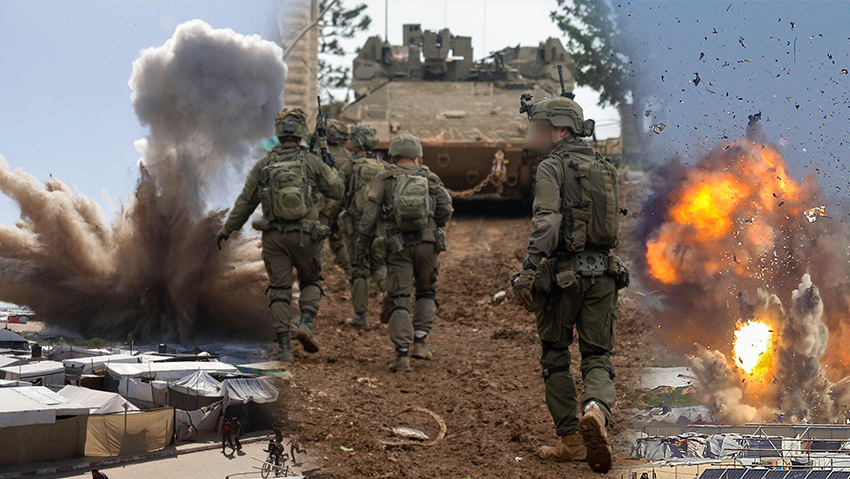
In recent months, the pace of targeted killings appears to have accelerated, with another name added to the list of those killed every few days.
Security officials said the return of all the hostages made it possible to carry out more strike plans.
“The fact that we are inside Gaza and that there are no longer hostages there gives us much greater freedom of action,” the officials said. “Conditions in Gaza are now far more favorable. We are collecting intelligence on the ground, and there are no hostages there anymore. That is producing results.”
The officials said that while hostages were being held in Gaza, there was greater concern that they could be harmed, prompting Israel to exercise additional caution.
“We carried out fewer strikes then and were much more careful,” they said. “We attacked only after confirming that the target was alone, so we could be certain no hostage would be harmed.”
An officer in the IDF Southern Command said the target list is intended to disrupt Hamas’ force deployment and military rebuilding.
“We identify the processes within the terrorist organization that concern us and locate operatives who are acting beyond the agreed framework, with the aim of stripping Hamas of capabilities,” the officer said.
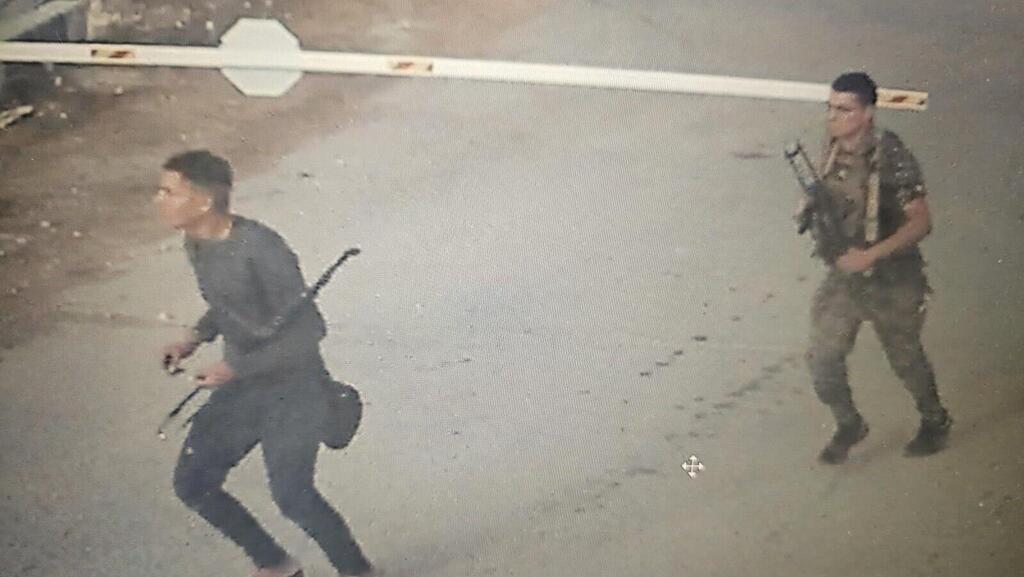
Terrorists raid Nir Oz on the morning of Oct. 7
(Security camera footage: Kibbutz Nir Oz)
He added that many of those who participated in the October 7 massacre are now involved in rebuilding Hamas’ military strength, after taking part in fighting throughout the war.
“Our desire to settle accounts with those who committed the atrocities is therefore aligned with our effort to stop Hamas activities that cannot be tolerated,” he said.
Avoiding harm to civilians
The security establishment does not use a fixed operational model for carrying out the targeted killings. Each strike is conducted according to conditions on the ground.
The dedicated command center closely monitors those marked for elimination and seeks to track nearly every move they make. Some strikes are launched immediately in response to newly emerging intelligence and a unique opportunity in the field. Others are planned in detail days or even longer in advance.
“A strike is built around opportunities, but opportunity is not the only factor that determines whether we act,” the Southern Command officer said.
“Once we designate someone as a target, we try to ensure that everything comes together: the opportunity created by intelligence surveillance and other considerations that cannot be discussed. There are many terrorists in Gaza, so we first build a target list, then wait for the right opportunity to strike with the greatest possible precision.”
On civilian casualties, the officer said intelligence teams seek to minimize harm to uninvolved people while monitoring a target.
“That is the IDF’s working assumption — that every strike should be as proportionate as possible,” he said.
The officer said the security establishment carries out an extensive process before every strike to avoid harming civilians.
“In the end, it depends on the process that must be completed and the level of threat posed by the target,” he said. “If the process concerning possible harm to civilians has been completed and the target is a ticking bomb, we may sometimes strike despite the risk of collateral damage. But that does not happen often because we carry out the strikes with maximum intelligence and operational precision. We do everything necessary, even when it requires more time and resources.”
He added that some opportunities to kill targets were passed up, with security officials waiting for a better chance to strike.
‘We will get them all’
Security officials stressed that alongside the importance of eliminating those who participated in the attack on Israel, the abductions and the holding of hostages, killing senior terrorist leaders who devised the plan is also of enormous importance.
“Take Izz al-Din al-Haddad and his successor, who was killed 10 days after assuming the position,” the officials said. “There is a continuity here. We are not allowing them to raise their heads. Ultimately, we want everyone there to understand that they are not protected — including the most senior figures who had a role in this.”
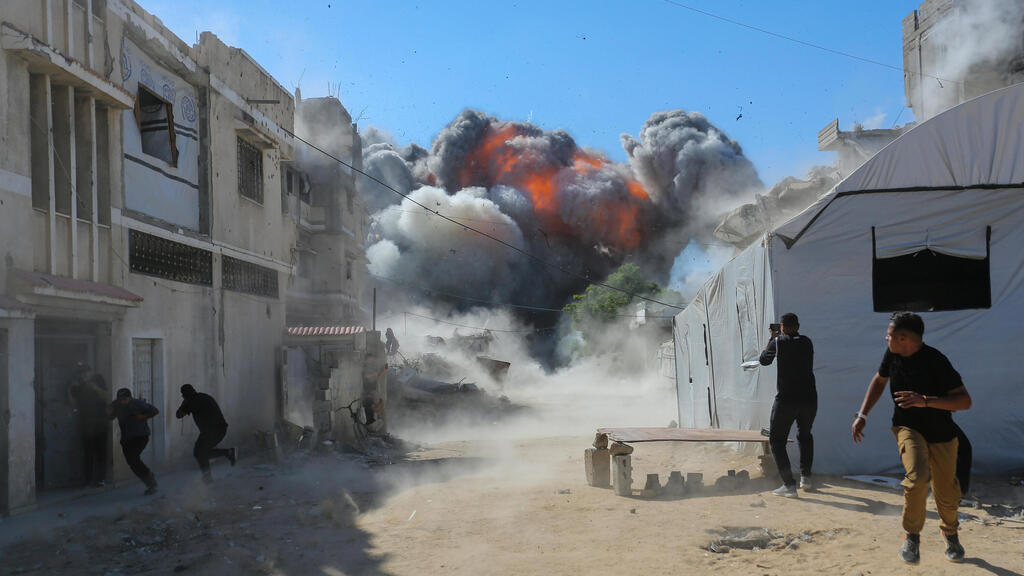
Footage of an IDF strike in Gaza last week
(Photo: Ahmad Hasaballah/Getty Images)
The teams in the joint command center continue working to locate and eliminate the names still on the list. For the security establishment, the mission has only one objective: find and kill them all.
“We will close the circle on every one of them. That is the main thing,” security officials said.
Referring to the killing announced a day earlier of Abdullah Jahha, an operative in Hamas’ naval unit, they added: “He participated in the raid and continued throughout the war to carry out his duties and promote terrorist activity in Gaza against IDF forces. That is why he remained a target we never stopped pursuing. In the end, we get them all.”
The Southern Command officer said that although the security establishment has extensive information about what occurred during the October 7 massacre, it has continued learning more over time.
“The list of terrorists is with us every day, and it overlaps with the same targets now carrying out Hamas’ rehabilitation and force-building efforts,” he said. “This list will not leave us. It remains before us as a moral and ethical obligation to close the circle on every one of them.”
He stressed that every strike is supported by a large system operating around the clock.
“Even when the intensity of the fighting changes, we remain engaged in the highest-intensity strike effort possible, without a moment of fatigue,” he said.
In less than two months, since the beginning of June, Israel has killed 21 terrorists from the list. Eleven participated in abducting Israelis or holding them hostage, while the others took part in the assault on Israel and the massacre.