

In 2019, a reforestation project was underway in southwestern China, aimed at restoring an area where trees had been cut down. During the work, one of the workers came across an abandoned quarry and discovered a "suspiciously large number" of animal bones. He alerted the authorities, and researchers who arrived to investigate discovered a cave containing more than 60,000 fossils and fossil fragments. Most of the finds were animal bones, as the worker had suspected, but among them were stone tools and human bones.
The layers containing the human bones were dated to approximately 134,000 to 167,000 years ago, but it was unclear which human species they belonged to. At the time, several different human populations lived in East Asia, including Neanderthals, Denisovans and the earlier Homo erectus. How could researchers determine which of them had inhabited the cave in southwestern China?
One way to find out is to extract genetic material from the bones. Over the past 15 years, researchers have succeeded in extracting DNA from several ancient bones, giving us the genetic sequences of both Neanderthals and Denisovans. In fact, this is what led to the recognition of Denisovans as a distinct human population. Researchers initially believed the bones they were examining belonged to Neanderthals, but discovered that their DNA was different. By comparing DNA from the bones found in China with sequences identified in previous studies, researchers could determine which population those ancient humans belonged to.
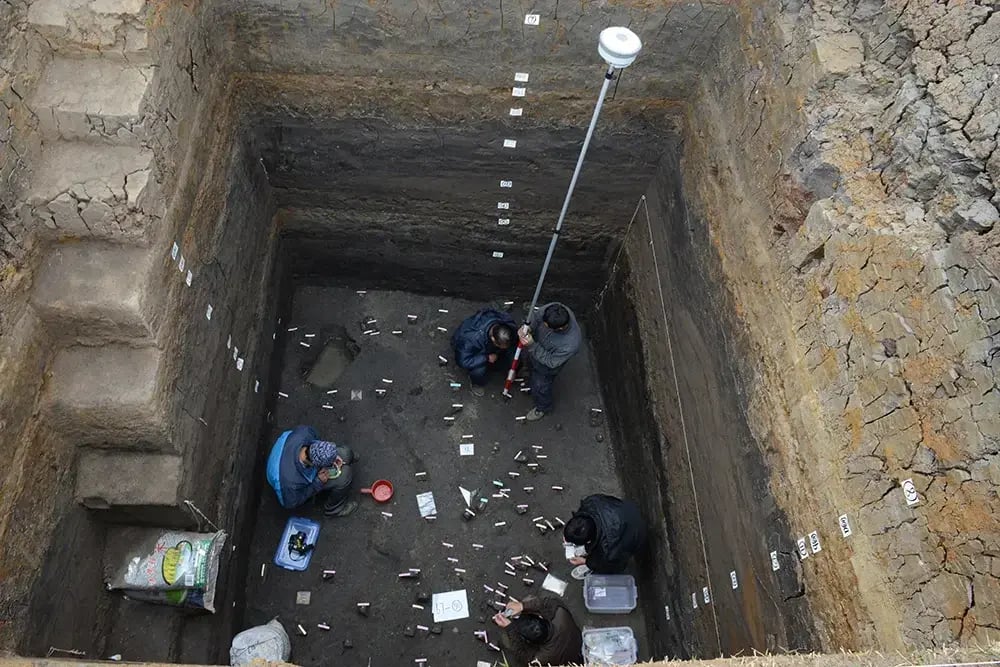
A cave containing more than 60,000 fossils and fossil fragments, including human bones and stone tools. Researchers excavate the cave
(Photo: University of Wollongong Australia)
Unfortunately, DNA breaks down too quickly, particularly in the warm climate of this region, and the researchers were unable to obtain a usable sample from the bones. They did, however, succeed in extracting several proteins. Proteins do not contain as much information as DNA, but they too consist of sequences of building blocks — in their case, amino acids — and valuable information can be obtained by deciphering those sequences. The sequence of amino acids in proteins is determined by the genetic sequence, meaning that genetic differences between populations can also be reflected in their proteins.
In a recently published study, researchers extracted proteins from five human fossils found in the cave and showed that their sequences identified the fossils as Denisovan. A second study, published alongside it, examined the tools and animal bones found together with the Denisovan remains. This is the first time researchers have identified tools belonging to this mysterious human population, previously known from only a small number of bones.
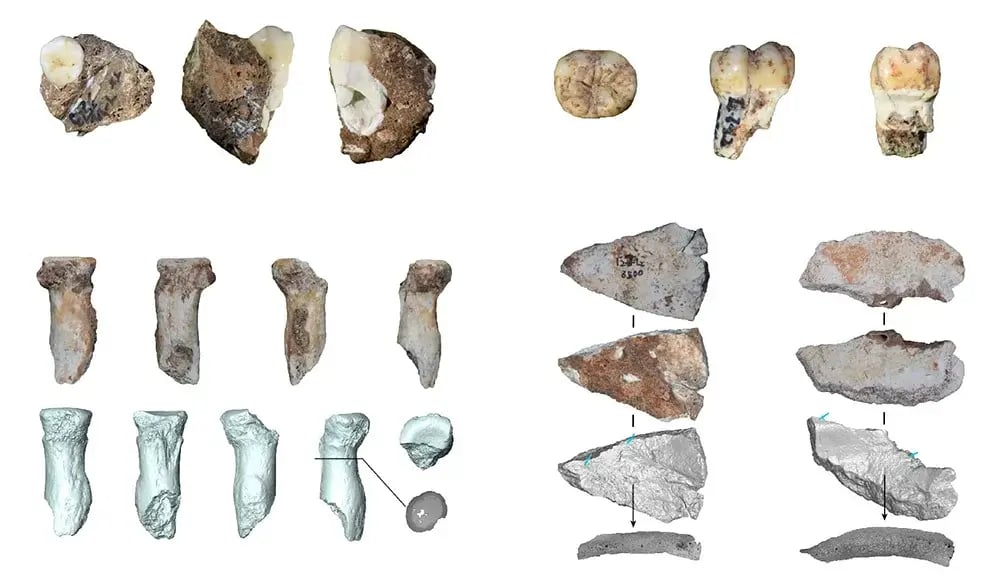
Researchers extracted proteins from five human fossils found in the cave and established that they belonged to Denisovans. The teeth and bones examined in the study
(Photo: Chinese Academy of Sciences Institute of Vertebrate Paleontology and Paleoanthropology)
Pieces of the Denisovan puzzle
The story of the Denisovans began in 2010, when researchers extracted DNA from a finger bone fragment discovered in Denisova Cave in Siberia and found that its genetic sequence differed from that of previously sequenced Neanderthal bones. The finger fragment was soon joined by several teeth whose DNA was also identified as Denisovan. In the years that followed, additional fossils gradually emerged: a jawbone in Tibet, another jawbone in Taiwan and a tooth in Laos.
A major breakthrough came last year, when a skull discovered in northern China was identified as Denisovan. For the first time, we learned what their faces looked like, or at least what one Denisovan's face looked like. We discovered that they resembled their Neanderthal relatives, although there were some differences. Their faces were flatter, like ours, and they were also large, apparently larger than both Neanderthals and our own ancestors.
That last finding was recently supported by another study, which has not yet undergone peer review, examining Denisovan leg bones from Taiwan. According to the researchers' estimates, one of the bones belonged to an individual who stood approximately 190 centimeters (6 feet, 3 inches) tall.
The new study adds several more fossils to the picture, including part of a radius, one of the two bones of the forearm. The fragment is from the end that connects to the upper arm bone to form the elbow. It is the first Denisovan fossil to provide information about the structure of the hand or arm, and like the skull, the radius displays a combination of Neanderthal and modern human characteristics.
Swiss anthropologist Christoph Zollikofer, who was not involved in the studies, told the journal Science that the shape of the elbow suggests Denisovans were capable of lifting heavy objects, like Neanderthals, while also performing the flexible movements characteristic of modern humans.
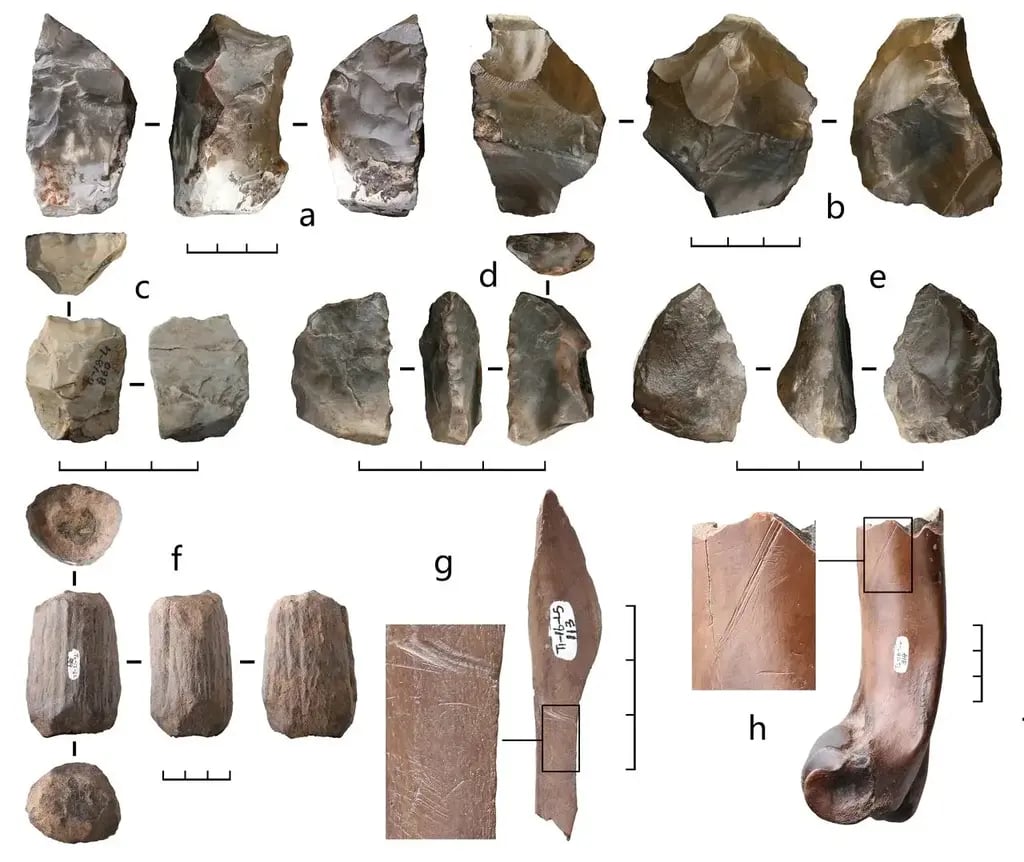
The more significant discovery concerns not the Denisovan bones themselves, but the tools they made and the animal bones found alongside them. Some of the stone and bone tools
(Photo: Liu et al./Science)
The more significant discovery, however, concerns the other findings: not the Denisovan bones themselves, but the tools they made and the animal bones found alongside them. These offer the first opportunity to learn about the lives of these ancient humans and the environment in which they lived.
"For years we knew them mainly from DNA and a handful of fragmentary fossils," said Spanish paleoanthropologist María Martinón-Torres, who was also not involved in the studies. "Denisovans are no longer just a molecular ghost."
The tools and bones accumulated in the cave over tens of thousands of years, from approximately 190,000 to 70,000 years ago. Of the many animal bones discovered there, most of those researchers were able to identify belonged to medium-sized and large hoofed animals, including various species of deer and water buffalo. Smaller numbers of rhinoceros and even hyena bones were also found.
The area appears to have offered abundant hunting opportunities, and researchers observed no significant changes in the animal populations over the long period during which Denisovans used the cave.
Simple, effective technology
Denisovans produced stone tools quickly and modified them only minimally, without investing the effort in shaping them that their Neanderthal relatives did. Rather than repeatedly striking stones to create precisely the cutting edge they wanted, they worked the stone only until they had a tool good enough for its intended purpose.
"Knock a few flakes off so you can use them, don’t spend time making it a beautiful shape," said American paleoanthropologist Eric Delson, who was not involved in the studies, describing their approach.
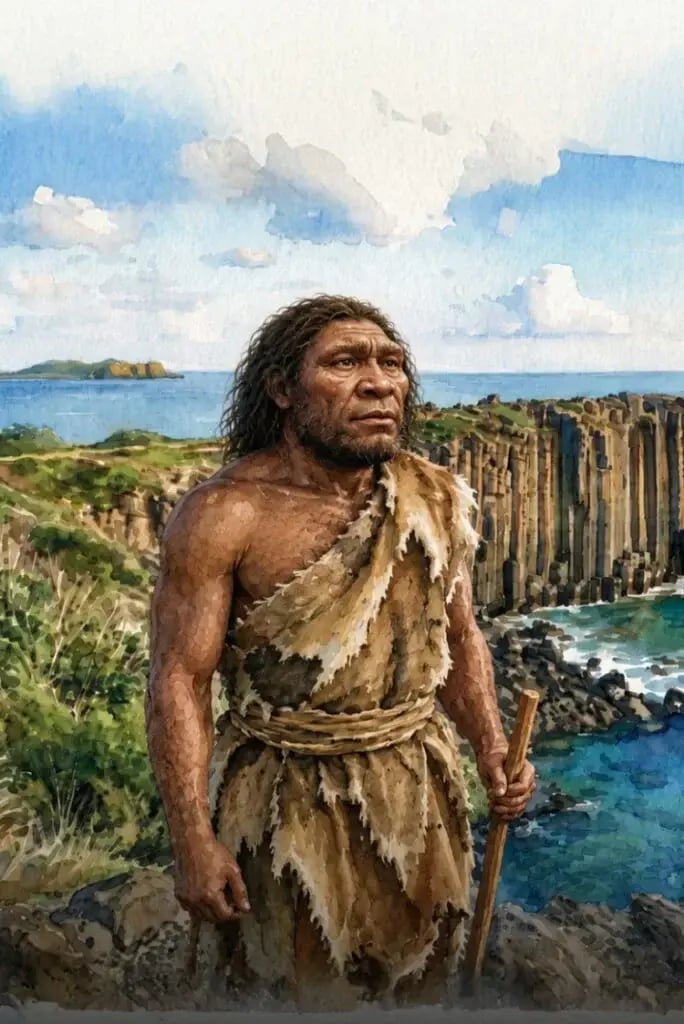
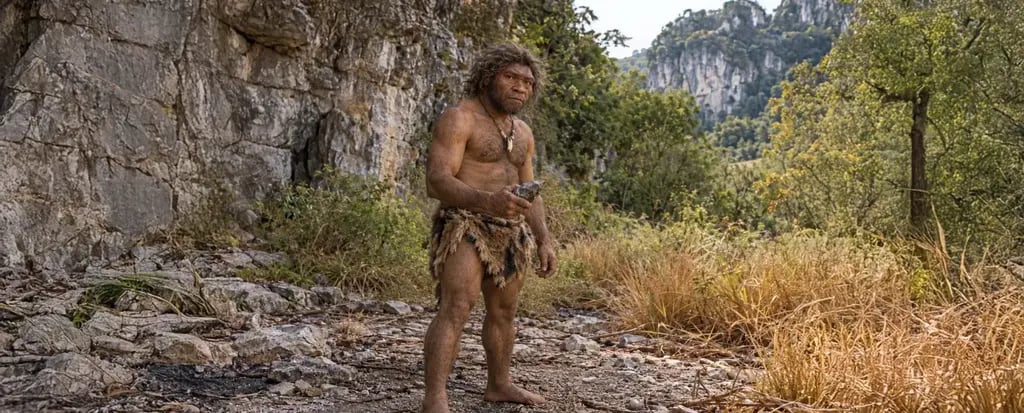
Illustration of a Denisovan
(Illustration: Liat Peli, using ChatGPT)
Denisovans used locally available stone to make their tools. They also made tools from bone, some of which closely resembled those found at Neanderthal sites. Researchers also discovered bone fragments that had not been deliberately shaped into tools, but bore marks indicating that Denisovans had used them for cutting and piercing. They apparently took advantage of the sharp edges that form naturally when bones are broken.
Denisovans therefore made some of their tools in ways similar to those used by Neanderthals, but they also developed their own technology. Their approach was characterized by economy of effort: They appear to have known how to make efficient use of the materials available in their surroundings, without investing more work than necessary to make those materials suitable for their intended purpose.
The fact that this approach remained unchanged throughout the roughly 120,000-year period suggests that, at least in the environment inhabited by this Denisovan population, it was effective.
These findings do not tell us why Denisovans disappeared. But for the first time, they allow us to see them not merely as genes and bones, but as human beings who lived, made things, hunted and made use of the world around them.
Dr. Yonat Eshchar is the editor-in-chief of the Davidson Institute of Science Education website, the educational arm of the Weizmann Institute of Science.