

SpaceX successfully launched the 13th test flight of its Starship system overnight Friday into Saturday, Israel time, marking the second flight of its new V3 generation. The spacecraft deployed 20 next-generation Starlink satellites, restarted an engine in space and completed a controlled splashdown in the Indian Ocean.
The launch followed two postponements. An earlier countdown was halted in its final moments after several Super Heavy booster engines failed to operate as planned, prompting SpaceX to replace two engines. A subsequent attempt was delayed by poor weather. During the completed flight, the Starship upper stage achieved most of its main objectives. The booster completed its return maneuver and reached the designated splashdown area, but only five of the 13 engines intended to slow its descent relit, causing it to strike the Gulf of Mexico at high speed rather than hover above the water as planned.
Starship’s ocean splashdown during its 13th test flight
(Video: SpaceX)


Starship’s 11th test flight
(Video: SpaceX/Reuters)
Like previous tests, the flight was suborbital and did not complete a full orbit of Earth. Starship lifted off from SpaceX’s Starbase facility in southern Texas, followed an arcing trajectory through space, reentered the atmosphere over the Indian Ocean and completed a controlled splashdown after flipping into a vertical position.
During the roughly hour-long mission, the spacecraft successfully deployed 20 upgraded Starlink V3 satellites into suborbital space. The more powerful satellites, designed to provide greater bandwidth and faster internet speeds, briefly connected with SpaceX’s existing Starlink network before following Starship’s trajectory back into the atmosphere and burning up as planned.
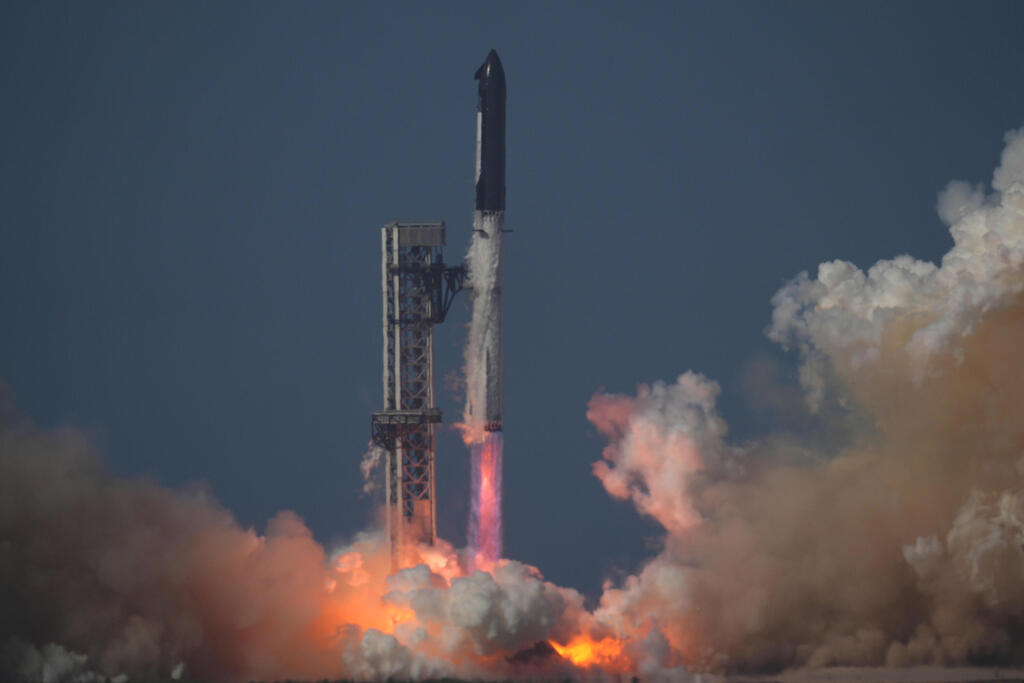
The test marked the first deployment of operational V3 satellites, after the previous flight carried 20 dummy versions matching their size and shape. SpaceX hopes to use Starship to expand the Starlink network with the new satellites, eventually providing direct satellite connectivity to standard mobile phones outside conventional cellular coverage areas.
Starship also completed an in-space engine burn and returned through the atmosphere with apparently limited damage to its heat shield, an improvement over earlier tests. The spacecraft then reignited its engines, turned upright and splashed down in the Indian Ocean, simulating the maneuver it would use for a future landing in Texas.
The Super Heavy booster was less successful during its return. Five engines failed to relight and slow its descent, causing it to strike the Gulf of Mexico at a higher speed than planned. SpaceX said it had been aiming for a softer splashdown.
A similar problem occurred during the previous test, when four engines failed to relight and the booster also hit the water hard. Despite the booster issue, the latest flight completed most of its principal objectives and represented a significant improvement over earlier missions.
Environmental groups challenge SpaceX land deal
SpaceX is also facing legal action over plans to expand its Starship launch site in southern Texas.
Environmental organizations have petitioned a federal court for an injunction freezing a land swap between SpaceX and the U.S. Fish and Wildlife Service. Under the agreement, SpaceX would receive nearly 3,000 dunams, about 740 acres, from the Lower Rio Grande Valley National Wildlife Refuge in exchange for slightly smaller company-owned parcels in the area, not all of them contiguous.
Environmental groups sued the Fish and Wildlife Service over the move, arguing that it harms the refuge and violates several laws. They are now seeking an injunction to prevent the exchange from taking place until the case is decided.

Elon Musk
(Photo: Adrees Latif/Reuters)
The petitioners say SpaceX’s activity in the area, particularly Starship launches, causes severe harm to local wildlife. They accuse the authorities of using that damage as justification for transferring the land to SpaceX rather than enforcing the law and working with the company to reduce the damage and protect wildlife.
SpaceX has previously faced several lawsuits from environmental organizations and local residents over damage and disruption caused by Starship launches. So far, however, the company has prevailed and its operations in the area have continued.
From sea to space
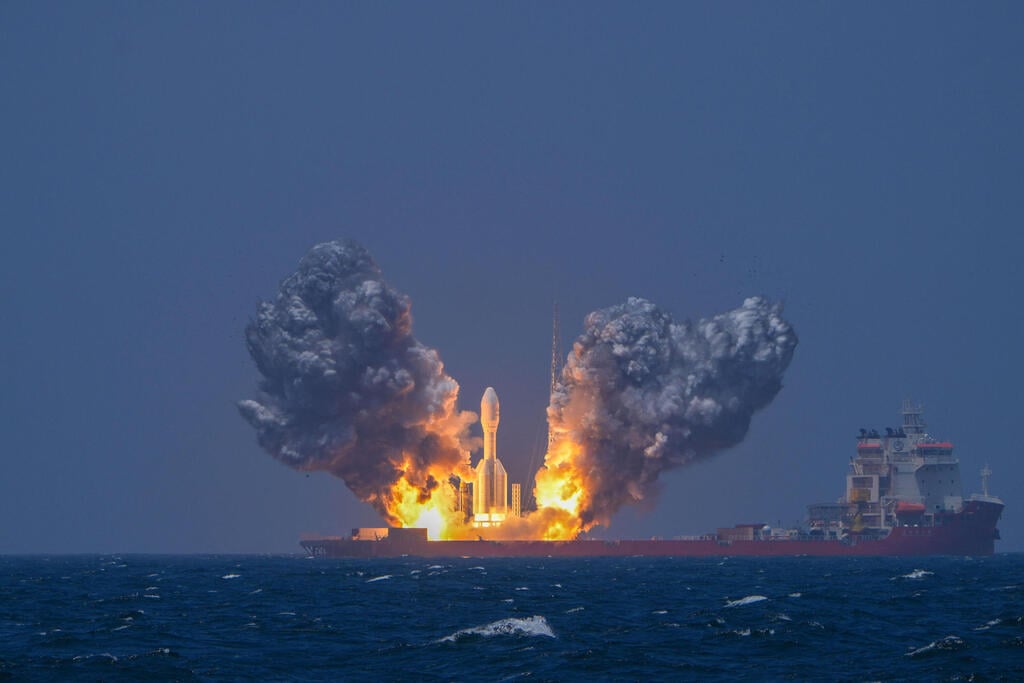
Chinese company Orienspace successfully launched satellites into space this week aboard a solid-fuel rocket. It was the third launch of the Gravity-1 rocket and, like the previous two, it was conducted from the deck of a ship at sea.
The rocket carried nine satellites. China’s Xinhua news agency reported that they entered their designated orbits as planned but did not provide details about the satellites themselves.
The launch from China
(Photo: CNS / AFP)
Gravity-1 is a relatively small rocket, standing 30 meters, or about 98 feet, tall. It can carry roughly 6.5 metric tons into low Earth orbit with the help of four solid-fuel boosters. By comparison, SpaceX’s liquid-fueled Falcon 9 workhorse can carry nearly 23 metric tons into low Earth orbit.
The first Gravity-1 launch took place in 2024 and the second in October 2025. The company said the wait for the next launch would not be as long and that it is expected to take place within the coming months.
Unlike the previous launches, which were carried out only a few kilometers from shore, this launch took place far out at sea, about 170 kilometers, or 106 miles, east of Shanghai. Launching from the sea provides greater flexibility in the choice of launch location and reduces the risk to populated areas.
The company is also developing two larger rocket models. Both will use solid fuel and will probably be launched from ships at sea.
Xu Guangang, chief designer of the Gravity-1 rocket, said sea launches of solid-fuel rockets were helping lay the groundwork for launching liquid-fueled rockets from the sea. He added that the company was also exploring other launch methods, including the use of offshore drilling platforms.
Abandoning a moon mission
NASA and U.S. company Draper have announced the cancellation of an uncrewed mission that was intended to land on the far side of the moon.
Draper won a NASA contract in 2022 to carry out the mission in 2025 as part of the Commercial Lunar Payload Services program. Under the program, NASA funds missions by privately developed lunar landers, which are also intended to carry NASA experiments to the moon.
The company received $73 million in funding and partnered with the U.S. branch of Japanese company ispace to develop the lander itself. It was supposed to land near the moon’s south pole, an area NASA has increasingly focused on because of its plans to establish a permanent base there.
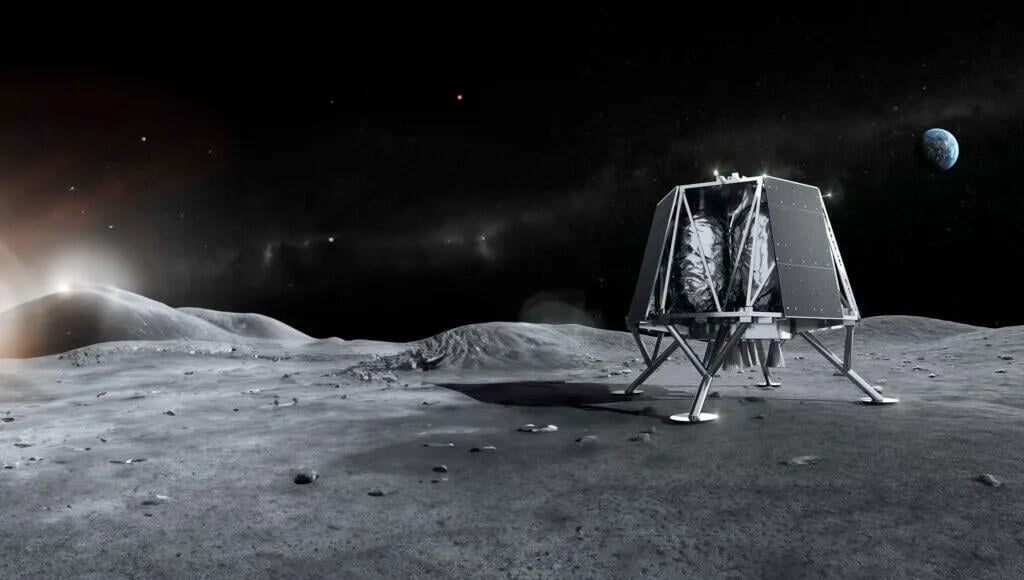
Could it still make it to the moon? The Apex lander developed by ispace for Draper
(Rendering: iSpace-US)
Development of the lander was repeatedly delayed because of design changes. The planned launch was postponed first to 2026 and then to 2027.
NASA eventually decided to cut its losses and end the project. Of the $73 million, the agency had already paid Draper $43 million for meeting certain milestones, much of which will now be lost. However, NASA intends to assign the experimental systems built for the lander to another mission in an effort to reduce the financial loss.
This is not the first time companies awarded contracts under the CLPS program have failed to meet their targets. In 2019, Orbit withdrew from a contract it had won. Another company, Masten, filed for bankruptcy in 2022, two years after winning a contract.
Still, NASA’s investment in Draper may yield other results, as ispace’s U.S. branch has said it intends to bid in the program’s next round of contracts.
First discovery of a moon in another solar system
Researchers have for the first time discovered a planetary body that meets the definition of a moon: It orbits another planetary body that itself orbits a star.
The researchers, led by scientists from the European Southern Observatory in Chile, found the object in the CD-35 2722 star system, about 73 light-years away. Its star is much smaller than the sun.
Orbiting that star is a brown dwarf, an object too large to be considered a planet but too small to be classified as a star. The brown dwarf has a mass about 30 times that of Jupiter.
When researchers measured variations in its rotation, they detected another object orbiting it. That object also appears to be more massive than Jupiter and composed of gas. The discovery still awaits final confirmation through additional measurements.
Kevin Hoy, who led the study, said the object is massive enough to qualify as a planet, but because it orbits another body that itself circles a star, the researchers consider it a moon. He noted, however, that it differs greatly from the small, rocky moons found in our solar system.

Artist’s rendering of the CD-35 2722 system
(Illustration: ESO/M. Kornmesser)
The molecular key to long-duration space missions
Astronauts on prolonged missions lose muscle and bone mass while living in microgravity. The phenomenon has been known for decades, but very little is understood about the cellular and molecular processes that cause it.
A new study led by scientists at the University of Tokyo and Japan’s Riken institute found that mitochondria, the organelles responsible for producing energy in cells, are to blame.
Previous studies had already suggested that mitochondria might be responsible for some of microgravity’s effects on the body. The new study narrows the process further, pointing to mitochondrial protein production.
Most of our DNA is concentrated in the cell nucleus, but mitochondria also have their own DNA, which carries instructions for producing certain proteins.
A study conducted a decade ago on worms sent into space found that exposure to microgravity affects DNA transcription, the process in which short sections of DNA are copied into messenger RNA molecules that serve as templates for protein production.
In the new study, astronauts aboard the International Space Station grew cultures of human cells prepared by the researchers. Each culture was grown for either 24 or 48 hours and then frozen.
Control cultures underwent exactly the same treatment but were kept in a centrifuge aboard the station that simulated Earth’s gravity.
When the frozen cultures returned to Earth, researchers found that mitochondria in cells exposed to microgravity contained less messenger RNA than those in the control cells and produced fewer proteins.
A similar effect, though less statistically significant, was observed in worm cells grown for up to four days under microgravity conditions.
In additional experiments on Earth, the researchers used a clinostat, a device that simulates reduced-gravity conditions. They found that mitochondrial protein production declined with each additional day under those conditions.

The findings could have a significant impact on astronauts during space missions; electron microscope image of mitochondria, artificially colored green
(Source: Jose Calvo/SPL)
The next step was to examine the specific effects of microgravity: which proteins the mitochondria stop producing and what triggers the process, or how cells sense that they are in microgravity.
The researchers suspected that cell-to-cell adhesion was one of the processes involved. Cells in tissue are connected through proteins on their surfaces that bind them to neighboring cells.
When researchers added proteins that strengthen cell-to-cell bonds to cultures of human and mouse cells, they found that the effect on mitochondria disappeared. The mitochondria in cells placed in the clinostat continued producing proteins normally.
By contrast, treating the cultures with proteins that disrupt cell-to-cell binding caused a marked decline in mitochondrial protein production.
Thomas Corydon, a space biologist at Aarhus University in Denmark who was not involved in the study, said microgravity is known to reduce or alter gene expression and that the research offers evidence of how this occurs at the protein level. He added that the findings could significantly affect astronauts and preparations for space missions.
Research team leader Shintaro Iwasaki added that the scientists are now searching for drugs or other small molecules that could activate mitochondrial protein production. They hope such treatment could slow the loss of muscle and bone during long-duration space missions.
The researchers also hope the approach could help treat conditions such as sarcopenia, which causes loss of muscle mass, particularly in older adults.
- Ettay Nevo, Davidson Institute of Science Education, the educational arm of the Weizmann Institute of Science
First published: 08:57, 07.25.26