


The military campaign jointly launched by the United States and Israel in February has entered a demanding phase, exposing a strategic vulnerability that defense planners have long anticipated.
Operational strain on U.S. air-defense interceptor inventories is no longer a theoretical risk reserved for future contingencies. It has become an active constraint shaping military operations, battlefield endurance and strategic sustainability across the Middle East.
Gallery
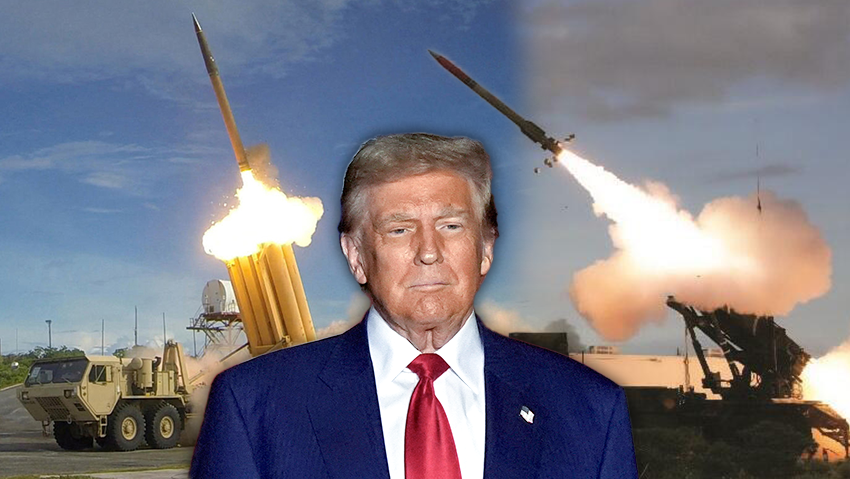
America’s interceptor shortage is forcing Israel to rethink military aid
(Photo: AP/Carlos Osorio, Reuters, US Military)
Yet what is often portrayed as an unexpected administrative scandal or sudden supply failure is being met with calculated adaptation. Israeli defense planners are neither surprised nor panicking as American inventories decline. Instead, they are carrying out a long-planned transition away from traditional reliance on grants, recognizing that national security can no longer remain permanently tied to external stockpiles or another country’s manufacturing capacity.
Reports of growing concern within the U.S. national security establishment reflect the genuine severity of these supply constraints. Although administration spokespersons have pushed back against accounts of internal friction over weapons stocks, publicly available data highlights the extraordinary volume of munitions expended since the war began.
According to detailed estimates compiled by the Center for Strategic and International Studies, the U.S. inventory of Patriot interceptors has fallen from approximately 2,330 rounds before the war with Iran to between 759 and 827 today. Stocks of Terminal High Altitude Area Defense, or THAAD, interceptors have similarly dropped from about 452 rounds to between 234 and 278.
Following the initial strikes on Iranian nuclear infrastructure and military command centers, which resulted in the death of Supreme Leader Ali Khamenei in the opening hours of the war, sustained threat engagements across multiple fronts have consumed high-tier interceptors far faster than production lines can replace them.
The primary cause of this shortfall is structural rather than political.
Precision air-defense interceptors depend on intricate manufacturing networks that are vulnerable to severe bottlenecks in solid rocket motors, specialized guidance microelectronics and critical raw materials. Even if Congress were to approve emergency funding immediately, rebuilding depleted stockpiles would take several years rather than a few months.
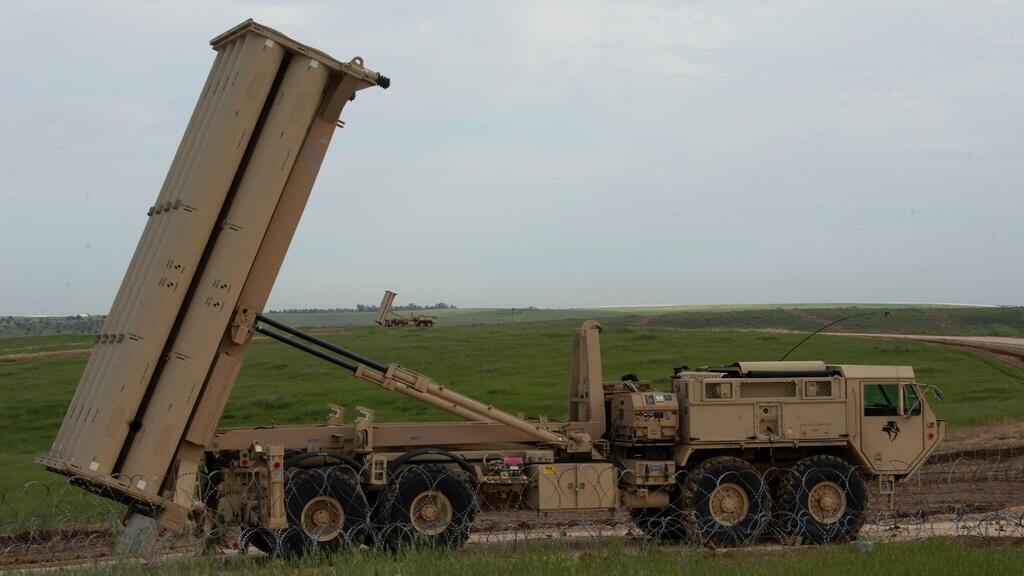
THAAD missile defense system
(Photo: AFP / HANDOUT / DVIDS / US ARMY)
U.S. military commanders responsible for maintaining global deterrence, particularly in the Indo-Pacific and Europe, must also preserve baseline operational readiness. Washington’s obligation to maintain worldwide strategic reserves therefore creates a firm ceiling on the number of interceptors available for export.
This industrial bottleneck coincides with a changing political landscape in Washington that is beginning to dismantle the traditional model of foreign military assistance.
Under the 10-year Memorandum of Understanding signed in 2016, the United States committed to providing Israel with $38 billion in defense assistance through fiscal year 2028. The framework includes $3.3 billion annually in Foreign Military Financing grants, alongside $500 million for joint missile-defense programs.
The bipartisan consensus that once made those appropriations nearly automatic, however, has fundamentally changed. More transactional approaches to international alliances, growing scrutiny of foreign spending and intensified debate over conditions on arms transfers have reshaped the political environment on Capitol Hill.
With the agreement set to expire in 2028, political leaders in Washington are unlikely to offer a straightforward renewal of the existing grant structure.
Prime Minister Benjamin Netanyahu has moved decisively to get ahead of these political realities rather than react to them after the fact.
In discussions with U.S. lawmakers, Netanyahu has outlined a strategic shift under which Israel would move from being an aid recipient to becoming an equal technological partner.
Under Israel’s proposed post-2028 framework, Jerusalem would support phasing out the $3.3 billion annual financing grant while preserving the dedicated missile-defense cooperation program. To replace direct financing, Israel has proposed establishing a joint research and development fund with Washington worth approximately $16 billion.
The strategy reflects a deliberate calculation that Israel would be better served by securing sovereign control over critical supply chains and intellectual property than by remaining dependent on foreign grant programs.
Israel is supporting this approach with a significant expansion of domestic industrial capacity and the introduction of advanced directed-energy technology.
Local defense manufacturers are rapidly increasing domestic production of artillery shells, armored-vehicle ammunition and precision-guided weapons in an effort to reduce exposure to vulnerable foreign supply chains.
Even more consequential is the operational integration of Rafael’s Iron Beam laser system. Declared operational in late 2025, Iron Beam reportedly saw its first combat deployment in March 2026 against rocket and drone attacks launched from Lebanon.
The financial logic behind this technological shift is compelling.
A single Tamir interceptor used by the Iron Dome system costs between $40,000 and $80,000, while upper-tier Arrow and THAAD interceptors can cost millions of dollars per launch. By contrast, the marginal cost of an Iron Beam engagement is limited largely to the electricity required to fire the laser.
Directed-energy systems nevertheless face physical limitations, including reduced performance in heavy cloud cover, fog and dense atmospheric dust. Lasers are therefore not intended to eliminate kinetic interceptors entirely, but to operate alongside them within a layered air-defense system.
By engaging high-volume, lower-cost threats such as unmanned aerial vehicles and short-range rockets, directed-energy systems can preserve finite kinetic interceptors for complex ballistic threats that require physical impact to destroy.
This strategic recalibration also carries direct implications for regional security cooperation under U.S. Central Command’s integrated air-defense architecture.
The Abraham Accords countries face the same inventory constraints during periods of sustained regional threat. Security cooperation was demonstrated during the 2026 war through Israel’s deployment of Iron Dome batteries and specialized personnel to the United Arab Emirates, alongside reports of technical assistance involving laser-based air-defense concepts.
A fully integrated regional defense network remains an emerging opportunity rather than a completed system. Nevertheless, Gulf defense planners are closely watching Israel’s transition.
Israel’s emphasis on co-production and directed-energy defense offers regional partners a practical model for developing more self-sufficient air-defense capabilities that can withstand prolonged conflict.
This evolving approach also changes how Israel presents its economic relationship with decision-makers in Washington.
By proposing co-development and licensing arrangements that would allow Israeli defense technologies to be manufactured in U.S. facilities, including potential production lines in industrial centers in Ohio or Arizona, foreign defense cooperation can be linked directly to American manufacturing.
 Amine Ayoub
Producing advanced defense systems in U.S. factories would create skilled manufacturing jobs while expanding the military capacity of both countries. This economic argument could establish a more durable political foundation for defense cooperation than traditional appeals for foreign aid.
Transitioning away from direct grant assistance would nevertheless involve significant budgetary trade-offs.
Israel currently allocates nearly 7% of its gross domestic product to national defense, one of the highest rates in the world. Fully absorbing expenses previously offset by Foreign Military Financing grants would force difficult fiscal decisions in Jerusalem.
Those decisions would have to ensure that military readiness and Israel’s qualitative military edge are preserved while domestic industrial production expands to meet growing demand.
Recent operational demands have demonstrated that long-term reliance on foreign manufacturing capacity is an unsustainable basis for national defense.
Israel and its regional partners are not retreating from their strategic partnership with the United States. Operational coordination, intelligence sharing and shared strategic interests will remain foundational to regional security.
What is reaching its natural conclusion is the assumption that one country’s defense can be permanently underwritten by another country’s inventory.
The alliance will continue, but the era of the allowance is coming to an end.
Amine Ayoub, a fellow at the Middle East Forum, is a policy analyst and writer based in Morocco. Follow him on X at @amineayoubx