

Miki Berkovich, one of the greatest athletes in Israeli history and an enduring symbol of Maccabi Tel Aviv basketball, has been dealing with a complex medical condition for the past two and a half years.
In recent days, social media has been flooded with rumors about the condition of the 72-year-old former star, who has made few public appearances in recent years. Throughout the period, he has been supported closely by his wife, Shelly Berkovich, as well as longtime friends including former basketball stars Tal Brody and Motti Aroesti and members of Maccabi Tel Aviv.
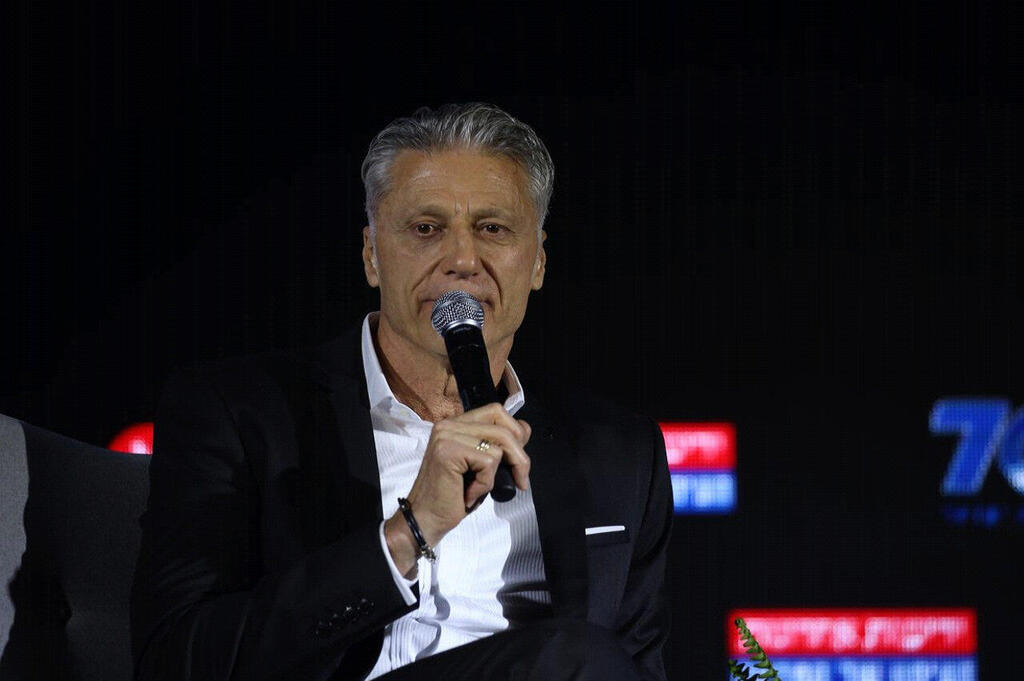
One of Berkovich’s most recent major public appearances came in 2024, when he received the Israel Prize, one of the country’s highest civilian honors.
Born in Kfar Saba in 1954, Berkovich joined Maccabi Tel Aviv’s youth system at age 11 and made his senior-team debut at 17. He went on to become one of the defining figures of Israeli basketball, playing a central role in Maccabi Tel Aviv’s historic European Cup triumph in 1977 and starring for Israel as the national team finished second at the 1979 European Championship.
Maccabi Tel Aviv chairman Shimon Mizrahi described Berkovich as “an exemplary athlete in every sense of the word.”
“He is a true winner who also knew how to bring the whole team with him,” Mizrahi said. “I will never forget the game against CSKA Moscow in Virton, which was played on his birthday. We celebrated both occasions together.”
Mizrahi said signs of Berkovich’s illness began appearing about two years ago.
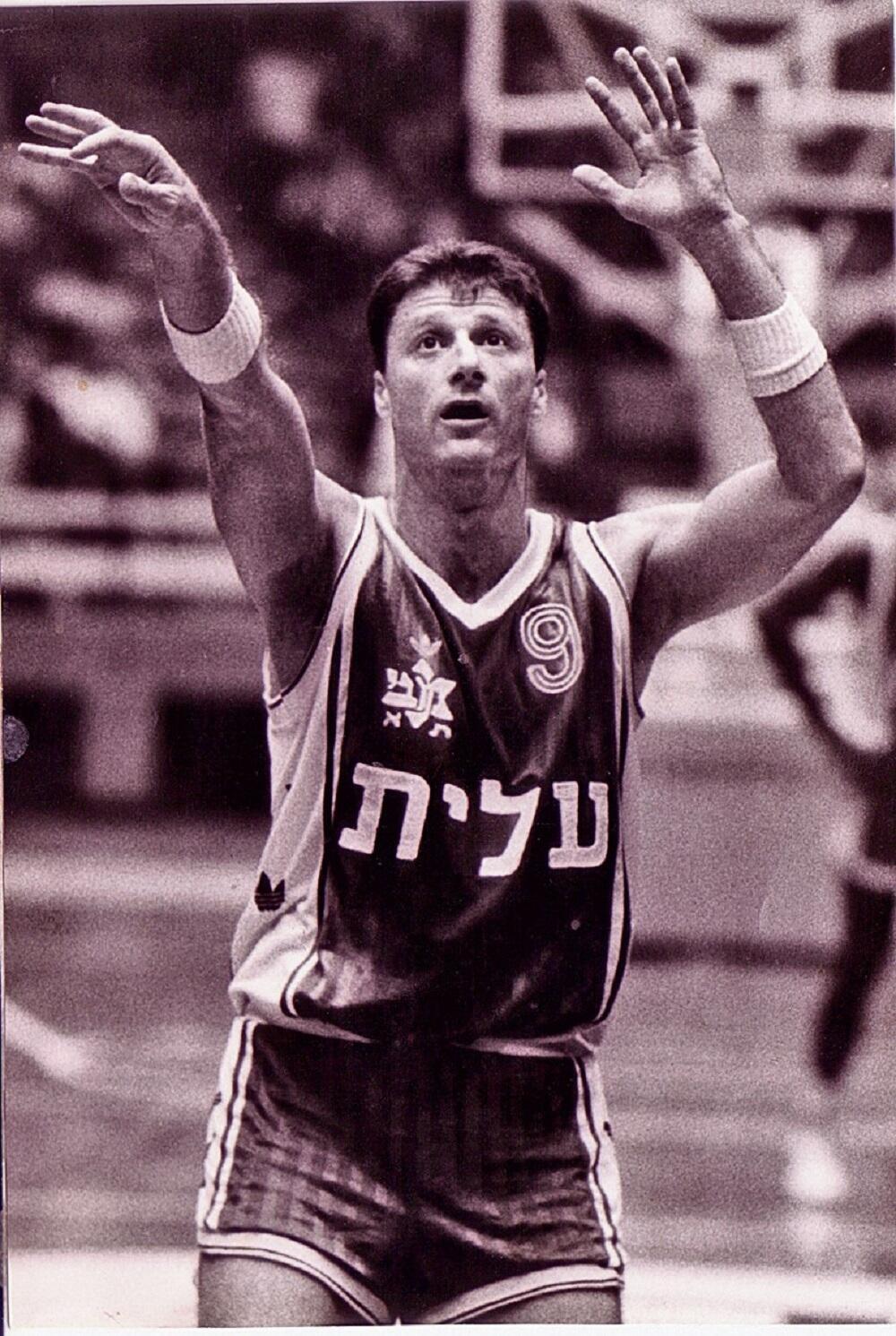
(Photo: Yossi Ruth)
“It was very painful to discover that signs of the disease had appeared, even though you could not see it in his outward appearance or physical build,” he said.
Mizrahi, who lives near Berkovich, said he often saw Brody and Aroesti walking with him around the neighborhood and also encountered Berkovich regularly himself.
“On Wednesday, I had the pleasure and honor of presenting his son with the jersey when Miki was inducted into the Israel Basketball Association Hall of Fame,” Mizrahi added.
Former Maccabi Tel Aviv star Doron Jamchi spoke emotionally about Berkovich, whom he described as his childhood hero.
“My beloved Miki, my childhood hero. The pain I feel is deep,” Jamchi said. “We protected his privacy over the past few years, but we remained very close.”
Jamchi said their conversations rarely centered on basketball.
“We talked about my grandchildren and his grandchildren,” he said. “I also met him quite a few times and saw the deterioration. Every time, I would go home with tears in my eyes.”
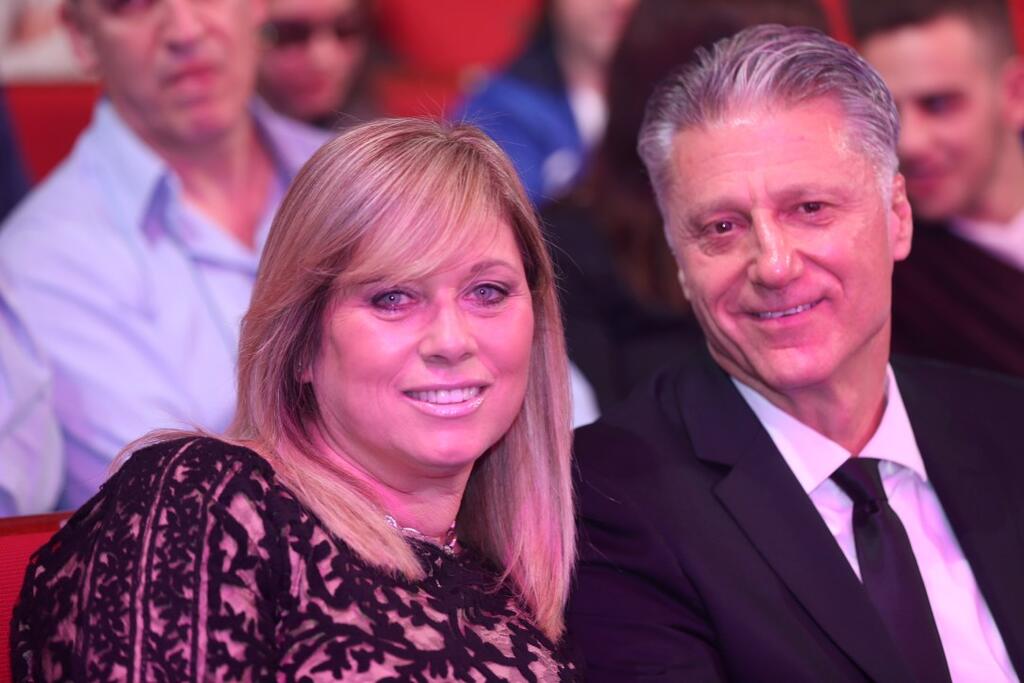
Miki and his wife Shelly
(Photo: Reuven Schwartz)
For Jamchi, the contrast between Berkovich’s extraordinary career and his current condition has been particularly difficult.
“My greatest pain is that after all the achievements of the greatest Israeli basketball player of all time, he reached an age when I wanted so much for him to enjoy the best years of his life,” he said. “It is so sad. I cannot stop thinking about him.”
Jamchi recalled countless emotional moments with Berkovich and said the former star repeatedly emphasized the importance of family.
“He used to call me, and I would call him, on all kinds of occasions,” Jamchi said. “His motto was always, ‘Doron, forget everything else. It is all nonsense. The grandchildren and the children are what matter most.’ He loves them so much, and they love him.”
Jamchi said Berkovich had long been a model for generations of Israeli players, including himself.
“Miki is the idol of so many players, certainly mine,” he said. “I always watched how seriously he treated his body, how he prepared himself for games, how he tied his shoelaces, how he put on his socks.”
“It is an incredibly painful situation. He was always so sharp and organized. I have not seen him for many months, and I simply miss him.”
Berkovich’s family declined to comment.