

A classified intelligence memo circulated among U.S. intelligence agencies and senior members of the Trump administration details an alleged Chinese industrial espionage operation that targeted Jensen Huang, CEO of chip and software giant Nvidia and one of the most powerful figures in the global technology industry.
According to officials familiar with U.S. intelligence and reports in the United States and Europe, including The New York Times and Britain’s Financial Times, Chinese businesswoman Alice Huang, also known as Huang Le, a former senior executive at Singapore-based data center company Megaspeed, was recruited by Beijing’s Ministry of State Security to gather information about Nvidia’s artificial intelligence chips and influence policy surrounding their export to China.
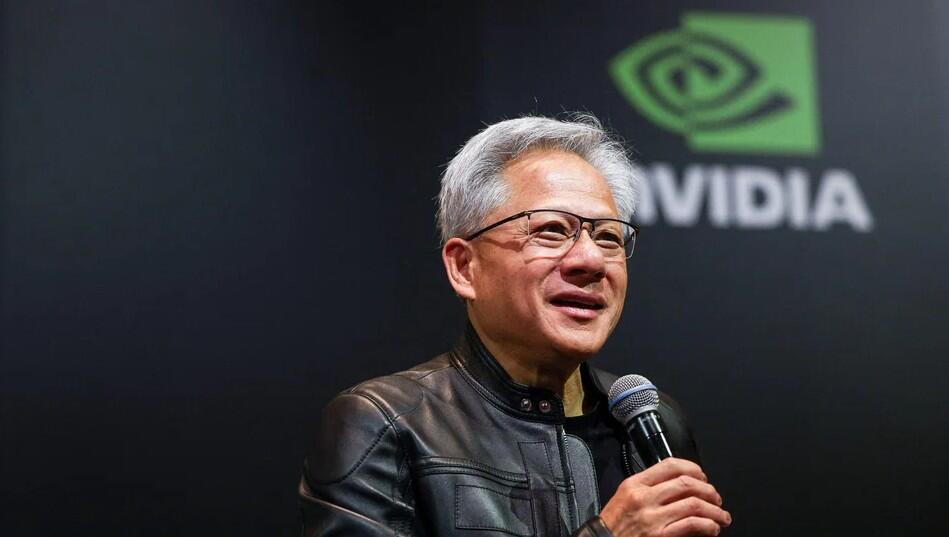
Huang’s alleged spy lover
The relationship between the two, who are not related despite sharing the same surname, allegedly extended beyond business and became romantic, according to the classified U.S. assessment. Their relationship was monitored closely by U.S. intelligence agencies for more than a year.
The two were photographed together at a bar in Taipei in June 2024. Around the same period, Megaspeed, which emerged from an obscure Chinese gaming company, began purchasing billions of dollars’ worth of advanced Nvidia chips.
Intelligence investigations found that Megaspeed had established data centers across Southeast Asia and rented their computing power to Chinese technology giant Alibaba. The arrangement created an indirect route for Chinese companies to gain access to advanced computing power despite U.S. restrictions on direct sales of sophisticated processors to China.
The network of companies and investors associated with Alice Huang, centered in Shanghai and Zhejiang province, also has financial links to China Electronics Technology Group Corporation, or CETC, one of China’s major military technology conglomerates, through an investment in one of its cybersecurity subsidiaries.
The affair has reached Capitol Hill, where the chairs of three House committees have asked Jensen Huang to appear for a closed-door briefing. Nvidia has sought to play down the allegations, saying the company does not share classified information with customers and that Huang’s meetings with Alice Huang were no different from his routine dealings with thousands of customers.
China, meanwhile, has rejected the espionage allegations as baseless smears. President Donald Trump was reportedly briefed on the matter last year and chose not to intervene. Congressional pressure, however, complicated plans to allow Nvidia to sell advanced chips to China under an arrangement involving a 25% government charge.
Why target Nvidia’s CEO?
To understand why China’s Ministry of State Security, headed by Chen Yixin, would devote substantial resources to targeting a single executive, it is necessary to look under the hood of the artificial intelligence revolution. Beijing’s strategic goal of becoming the world’s leading AI power by 2030 collides directly with Nvidia’s overwhelming advantage in advanced computing hardware.
An engineering comparison between the companies’ chip architectures illustrates the scale of China’s problem. Nvidia’s flagship Blackwell-generation processors, led by the GB300, provide roughly 7,500 teraflops of FP4 computing performance while consuming 1,400 watts, while the next-generation Rubin platform is expected to push performance as high as 66,700 teraflops in top-end configurations.

Nvidia’s Rubin platform
(Photo: Nvidia)
Simply put, Nvidia’s chips are several times faster than the most advanced Chinese alternatives. Huawei’s leading products, including its Ascend 910C series and newer Ascend 950 models, remain roughly three to four years behind Nvidia in features and capabilities.
China’s semiconductor industry is constrained by Western restrictions on advanced extreme ultraviolet lithography, or EUV, equipment and by shortages of high-bandwidth memory, or HBM. To compensate for the weakness of individual processors, Huawei connects hundreds of chips together in enormous systems such as CloudMatrix 384, which offers a combined 49 terabytes of memory and can run Chinese AI models including DeepSeek and Qwen.
But that approach comes with a steep energy cost. A Huawei system of this kind consumes around 559 kilowatts, compared with roughly 120 kilowatts for Nvidia’s far more efficient NVL72 system.
Nvidia also holds another major advantage through CUDA, its dominant software development platform. Moving workloads to Huawei’s competing CANN ecosystem can require technology companies to spend months adapting their software, while also reducing overall system efficiency.
China therefore has powerful incentives to gain closer access to Western semiconductor companies. U.S. and Western restrictions have pushed Beijing to develop domestic alternatives, but those technologies remain far from allowing China to compete as efficiently in the global market.
China may be capable of offering global users increasingly sophisticated large language models, but it still lacks the computing engines required to provide them with capabilities comparable to ChatGPT or Claude. With so many of the critical technologies concentrated in the hands of a small number of executives at the top of American technology companies, this is unlikely to be the last espionage controversy surrounding the industry.